
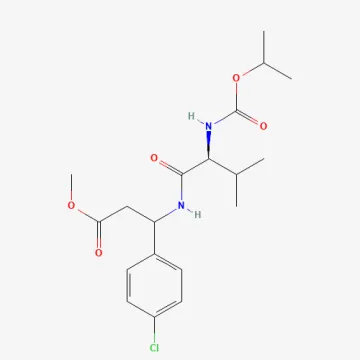
Valifenalate
Description
Mode of action
Valifenalate belongs to the chemical class of amino acid derivatives (valinamide carbamates). It is a systemic fungicide that effectively targets pathogenic fungi during their active development stages.
The mechanism of action involves disrupting phospholipid synthesis and inhibiting pathogen cell division. The substance actively suppresses mycelial growth, prevents spore formation, and blocks the penetration of infection into plant tissues.
The product exhibits significant preventive and curative properties. Upon contact with the leaf surface, it quickly penetrates plant tissues, providing long-lasting protection even under high humidity conditions.
Due to its systemic properties, valifenalate redistributes through plant tissues, protecting not only treated areas but also new growth. This feature is critical during periods of intensive vegetative growth.
The substance is often combined with contact fungicides to enhance efficacy and prevent the development of pathogen resistance, making it a vital tool in integrated pest management systems.
What it targets
Valifenalate is primarily used to control diseases caused by oomycetes. Its biological activity is highest against members of the Peronosporaceae and Phytophthoraceae families.
Key targets for application include late blight in tomatoes and potatoes, as well as downy mildew on cucumbers, onions, and grapes.
The product shows high efficacy against pathogens that have already developed resistance to phenylamides, making it an essential component of anti-resistance programs.
It successfully suppresses infections at early stages, reducing the risk of mass infestation of plantations during critical phases of plant development.
The use of valifenalate helps maintain the commercial quality of the harvest by preventing fruit and bulb rot during storage.
Rates and timing
The application rate of valifenalate depends on the specific product, crop type, and the level of infection pressure in the field. Working solutions are typically prepared according to the manufacturer's instructions.
Spraying is recommended during the growing season at the first signs of disease or when weather conditions become favorable for fungal development.
Intervals between treatments usually range from 7 to 12 days, depending on the crop growth rate and pathogen pressure in a particular season.
Maximum efficacy is achieved with uniform coverage of the leaf surface with the working solution, making it important to use well-maintained spraying equipment.
Pre-harvest intervals are strictly regulated and must be followed to ensure the safety of agricultural products for consumers.
Restrictions
Valifenalate requires strict adherence to safety protocols when handling pesticides, including the use of personal protective equipment for skin and respiratory protection.
It is not recommended to spray during hot sunny weather or in strong winds to avoid drift and loss of product efficacy.
Valifenalate is considered relatively safe for bees, but environmental regulations must be followed when applying the product near apiaries.
To prevent resistance development, valifenalate should not be used continuously; rotating it with fungicides from other chemical groups is recommended.
The product must be stored in its original packaging in a cool, dry place, keeping it out of reach of unauthorized persons and domestic animals.
Status in the European Union
Approved in the EU
- CAS number
- 283159-90-0
- Approved from
- 01.07.2014
- Approval until
- 01.03.2027
- ADI
- 0.07 mg/kg bw/day
- ARfD
- Not appl.
- AOEL
- 0.07 mg/kg bw/day
EU status is for reference only and does not replace national registration in your country.