
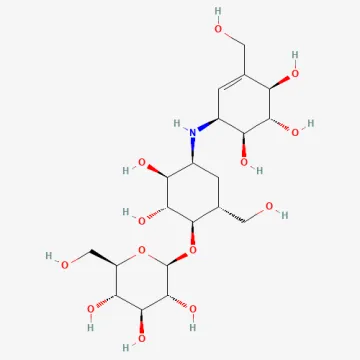
Validamycin
Description
Mode of action
Validamycin is an antibiotic fungicide derived from the metabolic processes of the soil-dwelling bacterium Streptomyces hygroscopicus. It is classified chemically as an aminoglycoside.
The mode of action involves the targeted inhibition of the enzyme trehalase in pathogenic fungi. By blocking this enzyme, the fungicide interferes with carbohydrate metabolism, effectively halting mycelial growth and development.
As a systemic fungicide, Validamycin is capable of moving through the plant vascular system, providing sustained protection to both treated tissues and subsequent new growth.
The substance exhibits high selectivity, meaning it typically poses low risks to non-target beneficial insects, making it a valuable tool in integrated pest management programs.
Validamycin is highly effective during the early stages of infection, acting as a preventive agent that blocks the sporulation and colonization capabilities of fungal pathogens.
What it targets
The primary use of Validamycin is the management of fungal pathogens that inflict significant damage on various agricultural crops, particularly in specialized farming systems.
It is widely utilized in rice production to combat Rhizoctonia solani, the pathogen responsible for rice sheath blight, which can severely reduce yields if left unmanaged.
Beyond rice, the fungicide is employed against a range of fungal diseases in vegetable crops, including various leaf spots and rot-causing pathogens in both field and greenhouse settings.
The effectiveness of Validamycin is attributed to its ability to disrupt the specific metabolic pathways that are essential for the survival of the targeted fungal species.
Regular application helps maintain the overall health of crops, ensuring better stress tolerance and consistent harvest quality under favorable disease conditions.
Rates and timing
Application rates for Validamycin are determined based on the specific formulation of the commercial product, the severity of the infection, and the targeted crop species.
The fungicide is typically applied via spraying, ensuring that the working solution reaches the critical parts of the plant canopy to maximize systemic absorption.
Timing is crucial: applications are most effective when performed at the first signs of disease or during critical growth stages that are highly susceptible to fungal infection.
While the risk of resistance development is low compared to other classes of fungicides, it is recommended to limit the number of seasonal applications to maintain long-term efficacy.
Consistent volume coverage is essential, as the systemic nature of the fungicide relies on adequate uptake through the plant surface to provide uniform protection.
Restrictions
Although Validamycin has low mammalian toxicity, handlers should always use appropriate personal protective equipment, including gloves and respirators, when mixing and applying the product.
Compatibility testing is advised before tank-mixing with other pesticides or fertilizers to ensure that the chemical stability and performance of the active ingredient are not compromised.
Environmental precautions must be taken to prevent runoff into surface waters, as the compound can negatively impact aquatic microbial balance if concentrations are excessive.
Storage should be in a cool, dry place away from direct sunlight to preserve the integrity of the antibiotic molecules, which can be sensitive to environmental degradation.
Proper equipment cleanup after application is a standard practice to prevent cross-contamination and to maintain the durability of the spraying hardware used in the field.
Status in the European Union
Not approved in the EU
- CAS number
- 37248-47-8
- Category (EU)
- FU - Fungicide
EU status is for reference only and does not replace national registration in your country.