
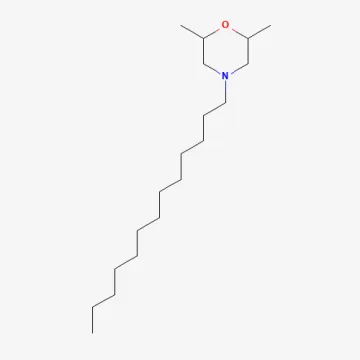
Tridemorph
Description
Mode of action
Tridemorph is a systemic fungicide belonging to the morpholine chemical group, widely recognized for its efficacy against fungal pathogens.
The core mechanism of action involves the inhibition of ergosterol biosynthesis, an essential process for fungal cell membrane integrity.
By interfering with this biosynthetic pathway, the fungicide effectively disrupts the growth and development of the fungal mycelium.
Tridemorph exhibits both preventive and curative properties, allowing it to address existing infections while protecting healthy tissue.
Due to its high lipophilicity, the substance is rapidly absorbed by plant tissues, providing robust and long-lasting protection against various diseases.
What it targets
The primary use of tridemorph is the control of powdery mildew, specifically caused by Erysiphe graminis on cereal crops.
It is effectively used in wheat, barley, and rye farming to mitigate the damage caused by foliar fungal infections.
The fungicide is particularly valuable in rotation programs, as it helps manage pathogen resistance to other chemical groups.
It performs well under a variety of climatic conditions, ensuring consistent results in diverse agricultural settings.
Beyond powdery mildew, it can be part of a broader strategy to maintain healthy crop development throughout the vegetative stage.
Rates and timing
Application rates for tridemorph are determined by the severity of the infection and the growth stage of the treated crop.
Optimal timing for application generally falls within the tillering or stem elongation phases when initial disease symptoms appear.
Uniform distribution of the active ingredient across the canopy is crucial for maximizing systemic activity and efficacy.
Farmers should strictly follow the recommended number of seasonal applications to minimize the selection pressure on fungal populations.
Adherence to pre-harvest intervals is essential to ensure that residues remain within safe regulatory limits for food consumption.
Restrictions
Tridemorph requires careful handling and the use of appropriate personal protective equipment to prevent skin, eye, or inhalation exposure.
It is important to avoid spraying during high wind conditions to prevent drift into adjacent sensitive areas or water bodies.
Exceeding recommended dosage levels can cause phytotoxicity, potentially harming crop development and reducing yields.
Storage should be in a cool, dry place, keeping the substance securely away from children, livestock, and drinking water supplies.
Environmental safety protocols must be followed, especially regarding the protection of aquatic life and non-target organisms in the field.
Status in the European Union
Not approved in the EU
- CAS number
- 24602-86-6
- Category (EU)
- FU - Fungicide
EU status is for reference only and does not replace national registration in your country.