
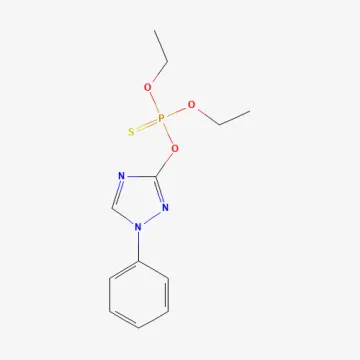
Triazophos
Description
Mode of action
Triazophos is a broad-spectrum organophosphate insecticide and acaricide that acts through systemic, contact, and stomach-poisoning effects on various pests.
Its primary mode of action involves the irreversible inhibition of the acetylcholinesterase enzyme, disrupting the nervous system function of insects and mites.
Due to its systemic properties, triazophos is absorbed by plant tissues, offering a reliable defense against hidden pests like stem borers or leaf miners.
The compound is highly effective against all stages of pest development, including eggs, larvae, and adults, providing comprehensive population control.
It exhibits strong residual activity, protecting the plant against re-infestation for several weeks depending on the application rate and environmental conditions.
What it targets
Triazophos is utilized on a diverse array of crops, including cereals, rice, cotton, potatoes, and various vegetable species.
It effectively targets major lepidopteran pests, such as bollworms, cutworms, and fruit borers, which are common threats to industrial crops.
The chemical is highly active against aphids, whiteflies, and other hemipteran species that cause direct damage and vector plant diseases.
Triazophos serves as an efficient acaricide, controlling spider mites that thrive in hot and dry conditions, thus preserving leaf health and crop productivity.
It is specifically valued in rice cultivation for controlling stem borers and other coleopteran pests that compromise crop yields during the growing season.
Rates and timing
Typical application rates range from 0.5 to 1.5 liters of product per hectare, depending on the target pest density and the specific crop type.
Applications should be timed to coincide with peak pest activity or when populations reach established economic threshold levels for the specific region.
Uniform spray distribution is critical for success, requiring specialized equipment to ensure complete coverage of both the upper and lower leaf surfaces.
Compatibility testing is essential when mixing triazophos with other agrochemicals, particularly avoiding alkaline formulations that can destabilize the active ingredient.
Adhering to integrated pest management practices by alternating triazophos with other chemical groups helps manage the risk of developing resistance in pest populations.
Restrictions
Triazophos is highly toxic to pollinators, particularly bees, and must not be applied while crops are in the flowering stage to prevent environmental harm.
Operators must strictly adhere to safety protocols, utilizing appropriate personal protective equipment to prevent dermal or respiratory exposure during application.
Pre-harvest intervals (PHI) must be strictly followed to ensure that pesticide residues on food products are within the safe regulatory limits for consumption.
Given its high toxicity to aquatic organisms, application near surface water bodies is strictly prohibited to prevent ecological damage in local watersheds.
Disposal of unused chemical containers must follow standardized procedures for high-toxicity substances to prevent soil and water contamination.
Status in the European Union
Not approved in the EU
- CAS number
- 24017-47-8
- Category (EU)
- IN - Insecticide
EU status is for reference only and does not replace national registration in your country.