
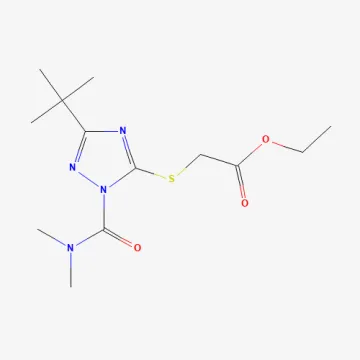
Triazamate
Description
Mode of action
Triazamate belongs to the carbamate class and acts as a highly effective systemic insecticide. The compound is capable of penetrating plant tissues and moving through the vascular system, providing protection not only for treated areas but also for new growth.
The mechanism of action involves the inhibition of the acetylcholinesterase enzyme in the pest's nervous system. This causes an accumulation of acetylcholine at the synapses, leading to paralysis and the rapid death of insect pests.
The substance exhibits strong contact and stomach action, ensuring that pests are eliminated both through direct contact with the solution and by consuming treated plant tissues.
Due to its systemic nature, Triazamate remains in the plant tissues for a significant period, establishing a persistent barrier against subsequent pest infestations.
The efficacy of the product is relatively stable under various temperature conditions, making it a reliable tool for protecting crops during periods of high pest pressure.
What it targets
Triazamate is used to control a wide range of concealed and surface-feeding pests. It is particularly effective against sap-sucking insects such as aphids, leafhoppers, and thrips.
Additionally, the compound shows significant activity against certain mite species, enhancing its versatility in integrated pest management programs.
Primary crops for application include cereals (wheat, barley), where it effectively suppresses pest populations during the tillering and stem elongation stages.
The insecticide is also successfully employed on industrial and vegetable crops that require protection against coleopteran and hemipteran insect species.
- Aphids and psyllids.
- Leafhoppers and shield bugs.
- Phytophagous mites.
- Thrips during early growth stages.
Rates and timing
Application rates vary depending on the crop type, pest density, and growth stage. Generally, rates range from 0.2 to 0.5 liters per hectare.
Treatments should be timed to coincide with peak pest activity or when the first signs of infestation appear. Ensuring uniform coverage of the foliage is critical for maximum performance.
If necessary, Triazamate can be used in tank mixes with fungicides or herbicides, provided that a compatibility test is conducted before mixing.
The number of applications per season is strictly regulated to prevent the development of pest resistance and to minimize chemical residues in the harvest.
The optimal time for application is early morning or late evening in calm weather conditions, which minimizes drift and improves overall efficacy.
Restrictions
Triazamate is moderately toxic to bees, and therefore application during the flowering stage is strictly prohibited to prevent the mortality of pollinators.
Works are prohibited in water protection zones and near water bodies to prevent environmental contamination and risks to aquatic life.
Personal protective equipment (PPE) for skin, respiratory, and eye protection is mandatory when handling the active substance. Eating, drinking, or smoking during application is strictly forbidden.
Strict pre-harvest intervals (PHI) must be followed to ensure the safety of agricultural produce for human consumption.
After completing operations, all spraying equipment must be thoroughly cleaned, as residue may interfere with the effectiveness of future treatments with other chemicals.
Status in the European Union
Not approved in the EU
- CAS number
- 112143-82-5
- Category (EU)
- IN - Insecticide
EU status is for reference only and does not replace national registration in your country.