
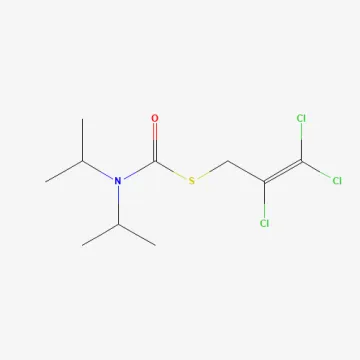
Tri-allate
Description
Mode of action
Tri-allate is a selective pre-emergence herbicide belonging to the thiocarbamate chemical class, designed for soil application.
The mode of action involves the inhibition of lipid synthesis and interference with cell division in the coleoptile or mesocotyl of germinating grass weeds.
By preventing the growth of the shoots, tri-allate effectively kills the weed seedlings before they emerge from the soil surface.
The effectiveness of this active ingredient relies on its proper incorporation into the top layer of the soil, where the seeds of the weeds are concentrated.
Its biological activity is highly dependent on environmental conditions, particularly soil moisture, which facilitates the uptake of the compound by weed seeds.
What it targets
Tri-allate is primarily used for the control of wild oats, which is considered one of the most problematic grass weeds in cereal production.
It also provides control over a limited range of other annual grass weeds, preventing them from competing with the main crop for water and nutrients.
The herbicide is extensively used in cereal crops and certain technical crops to ensure a clean start for the seedlings.
While it is very effective against specific grass species, it has a limited impact on broadleaf weeds, necessitating a complementary approach in weed management.
Integrating tri-allate into the crop protection strategy helps in managing weed seed banks over successive growing seasons.
Rates and timing
The application rates of tri-allate are determined based on the soil type, organic matter content, and the density of the weed infestation.
Mechanical incorporation into the soil to a depth of 3–5 cm is mandatory immediately after application to prevent degradation by UV light.
The timing of application is crucial; it must be performed before the germination of the weeds to ensure the herbicide is present in the soil zone.
Precise calibration of spraying equipment is essential to achieve a uniform distribution of the product across the entire treated field.
When applied according to the manufacturer's recommendations, tri-allate provides an extended window of protection for developing crops.
Restrictions
Due to its volatility and sensitivity to light, tri-allate must be incorporated into the soil shortly after spraying to maintain its efficacy.
High levels of organic matter in the soil can adsorb the chemical, reducing its bioavailability and requiring higher application rates or reduced expectations.
Safety protocols must be strictly followed, including the use of protective clothing and equipment to prevent exposure during handling and application.
The product should be managed to prevent runoff or leaching into water bodies, respecting standard environmental safety guidelines.
Storage of the herbicide requires cool, ventilated areas away from direct sunlight and moisture to ensure product stability and safety.
Status in the European Union
Approved in the EU
- CAS number
- 2303-17-5
- Approved from
- 01.01.2010
- Approval until
- 31.03.2027
- ADI
- 0.025 mg/kg bw/day
- ARfD
- 0.6 mg/kg bw
- AOEL
- 0.032 mg/kg bw/day
EU status is for reference only and does not replace national registration in your country.