
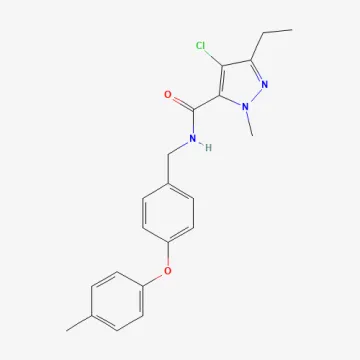
Tolfenpyrad
Description
Mode of action
Tolfenpyrad belongs to the pyrazole-carboxamide chemical class. It is a highly effective insecticide and acaricide that works through contact and ingestion, specifically targeting the mitochondrial function of pests.
The primary mechanism of action involves inhibiting complex I of the mitochondrial electron transport chain. This effectively stops the pest's respiration, leading to immediate cessation of feeding and eventual death.
The product is known for its rapid "knockdown effect," ensuring that pests stop damaging crops almost immediately after contact with the treated plant tissue.
Tolfenpyrad exhibits strong translaminar activity, meaning the active ingredient moves into leaf tissues, providing effective control even for areas where the spray solution did not land directly.
Due to its specific biochemical mode of action, Tolfenpyrad is an excellent tool for resistance management, as it shows no cross-resistance with traditional organophosphates or pyrethroids.
What it targets
Tolfenpyrad is effective against a diverse range of pests, including species from the orders Lepidoptera, Hemiptera, and Homoptera, as well as several mite species.
The main list of target organisms includes:
- Various species of aphids and whiteflies.
- Thrips, including the Western flower thrips.
- Lepidopteran pests such as caterpillars and leafminers.
- Psyllids, leafhoppers, and plant bugs.
- Spider mites and gall mites.
The application of this compound is particularly justified for vegetable crops in greenhouses and open fields, as well as for fruit trees and various ornamental plants.
The product shows efficacy against pests at various life stages, including larvae, nymphs, and adults, which helps in reducing the total number of required spray applications.
A key advantage of Tolfenpyrad is its ability to reach hidden pests located on the undersides of leaves, thanks to the compound's superior penetration properties.
Rates and timing
The timing of applications should be determined by the economic threshold of the specific pest species present on the crop during its active vegetative growth.
Application rates generally vary from 0.3 to 0.7 liters per hectare, depending on the severity of the infestation and the specific type of crop being treated.
When applying to tall fruit trees, it is essential to ensure thorough coverage of the entire leaf surface to achieve optimal protective results.
It is recommended to apply the product during early morning or evening hours, avoiding windy conditions and potential rainfall to prevent spray drift and degradation.
The duration of protective activity typically ranges from 7 to 14 days, depending on environmental conditions, the growth rate of the plant, and the current pest pressure in the field.
Restrictions
Tolfenpyrad is toxic to bees and other beneficial pollinating insects, making its application strictly prohibited during the flowering stage of crops.
To prevent the development of pest resistance, it is advised not to use the product more than twice per season, alternating with insecticides from different chemical classes.
Operators must adhere to strict safety regulations and wear appropriate personal protective equipment to prevent skin contact or inhalation during application.
The substance can be harmful to aquatic life; therefore, it is critical to prevent any runoff or disposal of leftover spray solutions into water bodies or sewage systems.
Observing pre-harvest intervals (PHI) is mandatory to ensure the food safety of the final agricultural produce and to comply with maximum residue limits.
Status in the European Union
Not approved in the EU
- CAS number
- 129558-76-5
EU status is for reference only and does not replace national registration in your country.