
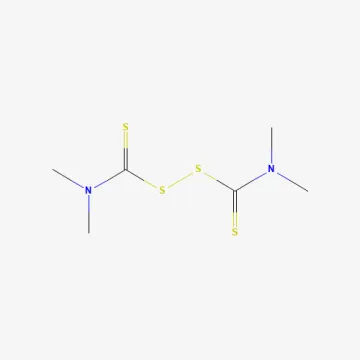
Thiram
Description
Mode of action
Thiram belongs to the dithiocarbamate chemical class and acts as a broad-spectrum contact fungicide. Unlike systemic agents, it does not penetrate into the plant but creates a protective barrier on the surface of seeds and seedlings.
The mechanism of action is based on the inhibition of enzymes containing copper or sulfhydryl groups, which is critical for fungal metabolism. The substance effectively blocks respiratory processes and ATP synthesis in pathogens.
Due to its multi-site mode of action on fungal cells, the risk of resistance development in pathogens is extremely low, making it a vital component for anti-resistance protection programs.
The product effectively suppresses both seed-borne and soil-borne infections while remaining inert toward the germinating grain when regulations are strictly followed.
The duration of the protective action persists until the seedling emergence stage, preventing the death of young sprouts in high soil pathogen pressure conditions.
What it targets
Thiram is primarily used for the control of a complex of diseases caused by soil-borne and seed-borne pathogens during early stages of plant development.
The spectrum of controlled diseases includes dangerous fungal infections such as root rots, seed mold, ascochyta blight, anthracnose, fusarium, phoma, and cercospora leaf spot.
The substance is highly effective against pathogens of the genera Pythium, Rhizoctonia, Fusarium, and Phoma, which cause "damping-off" and seedling mortality.
Major crops treated include cereals, corn, sunflower, flax, legumes, and various vegetable crops sown by seed.
In addition, thiram is frequently employed as a fungicide for orchards and vineyards to protect against grey mold (botrytis) and various types of leaf spotting.
Rates and timing
Application rates for thiram depend directly on the formulation of the product (suspension concentrate or wettable powder) and the type of crop being protected.
For pre-sowing seed treatment, the dosage typically ranges from 2 to 8 liters of product per ton of seed material, depending on the pathogen pressure.
For field crops, treatment timing is limited to the seed preparation phase; application is conducted well in advance or immediately before sowing using specialized machinery.
When spraying orchards and vegetables, the dosage must be adjusted according to the plant's phenological stage and the expected level of disease pressure.
Ensuring uniform coverage of the seed or vegetative organs is essential, as the contact nature of the fungicide does not allow for translocation within the plant.
Restrictions
Thiram is a moderately toxic compound to humans; therefore, it is mandatory to use full personal protective equipment for skin, eyes, and respiratory organs when handling it.
The product is hazardous to aquatic organisms and bees; therefore, it is strictly forbidden to allow residues to enter open water bodies, drainage systems, or areas with high insect activity.
Treated grain must never be used for animal feed or human food preparation.
Storage must be in dry, cool locations, out of reach of children and pets, and in the original, tightly sealed packaging.
When working in field conditions, safety zones must be maintained, and wind direction must be monitored to prevent spray drift onto neighboring crops.
Status in the European Union
Not approved in the EU
- CAS number
- 137-26-8
- Category (EU)
- FU - Fungicide
- Approved from
- 01.08.2004
- Approval until
- 30.10.2018
- ADI
- 0.01 mg/kg bw/day
- ARfD
- 0.025 mg/kg bw
- AOEL
- 0.02 mg/kg bw/day
EU status is for reference only and does not replace national registration in your country.