
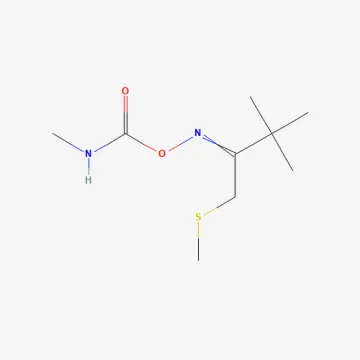
Thiofanox
Description
Mode of action
Thiofanox is a systemic insecticide belonging to the carbamate chemical class. It is widely recognized for its efficacy against various insect pests, providing both contact and stomach poison activity.
The mode of action of Thiofanox involves the inhibition of the enzyme acetylcholinesterase within the insect's nervous system. This results in the accumulation of neurotransmitters, leading to continuous nerve impulse transmission, paralysis, and ultimately the death of the pest.
Because it is a systemic substance, it is absorbed by the roots or foliage and translocated throughout the plant's vascular system. This ensures that even pests feeding on newly developed plant parts are exposed to the active ingredient.
Thiofanox is highly valued for its ability to provide a protective barrier within plant tissues, which remains effective for a significant period following the initial application.
Its performance is influenced by environmental conditions such as temperature and humidity, which regulate the plant's uptake speed and the insect's metabolic activity, thereby affecting the overall speed of the insecticidal effect.
What it targets
Thiofanox is primarily targeted at pests with sucking and chewing mouthparts. It is particularly effective against aphids, leafhoppers, and various soil-dwelling insects that damage roots.
By protecting the root zone and seedling stages, it helps to maintain plant vigor during the most vulnerable growth periods, allowing the crop to establish itself without early pest pressure.
- Aphids and other sucking insects.
- Soil-dwelling larvae and beetles.
- Pests affecting field and vegetable crops.
- Populations resistant to older organophosphate insecticides.
The chemical's spectrum of activity makes it a useful component in integrated pest management (IPM) strategies, especially when early-season protection is required to prevent yield loss.
It is specifically beneficial in agricultural systems where soil pests cause significant damage to the germination and emergence of young crops, as its systemic nature protects the growing plant.
Rates and timing
The application rates for Thiofanox must be strictly adhered to according to the specific product label. These rates are determined by the crop type, pest species, and the intended method of application.
For seed treatment applications, precise dosages are required to ensure that the seedling is protected from soil-borne pests without causing any phytotoxic damage to the germinating seeds.
Foliar application requires careful calibration of equipment to ensure even coverage across the crop canopy. Applying excessive amounts can be detrimental to the plant or the surrounding environment.
Timing the application based on pest monitoring reports is crucial. It is most effective when applied at the onset of pest infestation, as smaller, younger pests are generally more susceptible to the active ingredient.
Observing the pre-harvest interval (PHI) is mandatory to ensure that the final harvested product is safe for consumption and meets international residue standards.
Restrictions
Safety is a critical concern when handling Thiofanox due to its inherent toxicity. Personal protective equipment (PPE) including gloves, goggles, and respiratory masks must be worn at all times during handling and application.
The substance poses a significant risk to bees and other pollinators. Consequently, applications must be avoided during crop flowering and when weeds within the field are in bloom to protect beneficial insect populations.
To prevent the development of insect resistance, it is highly recommended to rotate Thiofanox with insecticides from different chemical classes, thus avoiding constant selection pressure.
Proper storage is essential; the chemical should be kept in its original, sealed container in a cool, dry, and locked facility, away from children, food, and animal feed.
Finally, environmental regulations must be followed when disposing of waste products or used containers to ensure that the chemical does not leach into groundwater or contaminate surface water systems.
Status in the European Union
Not approved in the EU
- CAS number
- See note
- Category (EU)
- IN - Insecticide
EU status is for reference only and does not replace national registration in your country.