
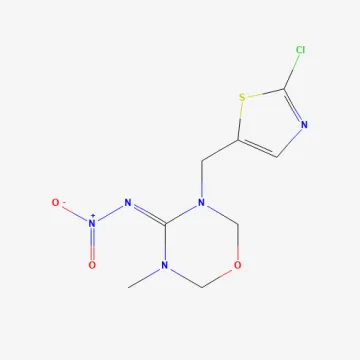
Thiamethoxam
Description
Mode of action
Thiamethoxam belongs to the second generation of the neonicotinoid chemical class. It is a systemic active ingredient that penetrates plant tissues and quickly spreads through the vascular system.
Its mode of action is based on blocking nicotinic acetylcholine receptors in the insect's nervous system. Consequently, nerve impulse transmission is interrupted, leading to paralysis and subsequent death of the pest.
The product exhibits a distinct translaminar action, allowing it to effectively protect even those parts of the plant that were not directly touched by the spray solution.
Due to its high systemic properties, the active ingredient shows excellent resistance to being washed away by rainfall, ensuring prolonged protection for both seedlings and adult plants.
One of the key features is the "vigor" effect (growth stimulation), which often occurs when using thiamethoxam for seed treatment before sowing.
What it targets
Thiamethoxam demonstrates high efficacy against a wide range of concealed, sucking, and leaf-chewing pests of agricultural crops.
The primary targets are members of the orders Hemiptera, Coleoptera, Homoptera, and Lepidoptera. These include aphids, whiteflies, thrips, leafhoppers, and various species of soil pests.
- Colorado potato beetle on potato crops.
- Hessian fly and cereal leaf beetle on grain crops.
- Wireworms and false wireworms during seed treatment.
- Complex of pests on greenhouse and open-field vegetable crops.
Thanks to its selective action, the product is successfully used in integrated pest management systems, providing long-term suppression of pest populations.
The substance works effectively under various climatic conditions, maintaining toxicity to pests even at lower temperatures during early spring applications.
Rates and timing
Application rates for thiamethoxam vary depending on the method of application: for seed treatment, they are measured in grams per seed unit, and for spraying, in grams per hectare of land.
For pre-sowing treatment of seeds of cereals, corn, or sugar beets, concentrations from 100 to 500 grams of product per ton of seeds are typically used, depending on the target object.
When applied to vegetative plants, the application rate usually ranges from 0.05 to 0.25 kg/ha depending on the level of pest infestation and the density of the crop's foliage.
Waiting periods until harvest are regulated by national standards and can range from 14 to 30 days, depending on the crop and the type of product.
To prevent the development of resistance, it is recommended to alternate the use of thiamethoxam with insecticides of other chemical classes that possess a different mode of action.
Restrictions
Thiamethoxam is highly toxic to bees and other pollinating insects; therefore, its use is strictly limited during the flowering period of entomophilous crops.
It is strictly prohibited for the working solution to enter water bodies, as the substance is highly persistent in aquatic environments and poses a danger to aquatic organisms.
When working with the product, it is mandatory to strictly follow personal safety regulations: wear protective clothing, gloves, respirators, and goggles to protect skin and mucous membranes.
Storage should be carried out in specialized dry facilities at temperatures that prevent the active ingredient from freezing or overheating, away from food products.
In case of large-scale applications, it is recommended to notify local beekeepers within a radius of several kilometers at least a few days before conducting chemical field treatments.
Status in the European Union
Not approved in the EU
- CAS number
- 153719-23-4
- Category (EU)
- IN - Insecticide
- Approved from
- 01.02.2007
- Approval until
- 30.04.2019
- ADI
- 0.026 mg/kg bw/day
- ARfD
- 0.5 mg/kg bw
- AOEL
- 0.08 mg/kg bw/day
EU status is for reference only and does not replace national registration in your country.