
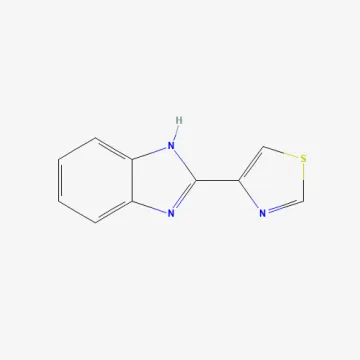
Thiabendazole
Description
Mode of action
Thiabendazole belongs to the benzimidazole chemical class and acts as a systemic fungicide. Its primary mode of action is the inhibition of beta-tubulin biosynthesis, which disrupts the mitosis (cell division) process in pathogenic fungi, effectively stopping their growth.
The substance exhibits systemic properties, allowing it to be absorbed by seeds or plant tissues. This systemic movement ensures that the plant is protected internally against pathogens that may be present on the surface of the seed or in the surrounding soil.
It provides both preventative and curative control against various fungal infections. By interfering with the development of the fungal mycelium, it prevents the establishment of disease in the early stages of plant development, promoting healthy crop growth.
The duration of protection offered by thiabendazole is significant, making it a reliable choice for seed dressings. It remains stable within the plant tissues, providing continued defense during the crucial germination phase.
Because of its specific metabolic activity, it is highly effective against a variety of agricultural pathogens while generally being safe for the target crops when applied according to the labeled rates and instructions.
What it targets
Thiabendazole is highly effective against a broad spectrum of soil-borne and seed-borne diseases. It is commonly used to combat various types of rot, including Fusarium and Phoma species, as well as Helminthosporium.
In potato cultivation, it is widely recognized for its efficacy in treating tubers against dry rot, silver scurf, and other storage diseases. This helps in maintaining high tuber quality and reducing losses during long-term storage.
For cereals, it is frequently utilized as a component in seed treatment formulations to control bunt, smut, and various root rot pathogens. This application is essential for achieving high field emergence and vigor.
Furthermore, it serves as a critical tool for post-harvest protection of fruits and vegetables. By applying thiabendazole, producers can prevent fungal decay during storage and transport, thereby extending the shelf life of the produce.
- Fusarium rot
- Helminthosporium diseases
- Phoma blight
- Potato silver scurf
- Bunt and smut diseases
Rates and timing
The application rates of thiabendazole depend heavily on the specific formulation and the target crop. For seed treatments, the dosage is usually expressed in milliliters per ton of seeds, ensuring a uniform coating on the grain surface.
When treating potatoes, application can involve spraying or dipping the tubers before storage. The rate must be calibrated to ensure complete coverage of the tuber surface to maximize antifungal protection.
Timing is crucial: seed treatments should be performed well in advance of sowing to ensure proper adhesion. Post-harvest treatments should be applied as soon as possible after cleaning to prevent the initial infection by storage pathogens.
Environmental conditions, such as humidity and storage temperature, must be managed to ensure the efficacy of the fungicide. Excessive moisture may reduce the adherence of the active ingredient to the treated surfaces.
Always adhere to the specific instructions provided by the manufacturer. Over-application can lead to phytotoxicity or excessive residues, while under-application may result in inadequate disease control and increased resistance pressure.
Restrictions
Thiabendazole is classified as having moderate toxicity, requiring standard safety precautions. Operators should wear protective clothing, gloves, and respiratory masks when handling concentrated formulations to prevent skin contact or inhalation.
The risk of resistance development in fungi is a concern with benzimidazoles. It is strongly recommended to rotate thiabendazole with fungicides that possess different modes of action to maintain its long-term efficacy in the field.
Environmental stewardship is vital; avoid spilling the product or allowing runoff into water bodies. Disposal of containers and leftover spray solutions must strictly follow local and national regulations regarding chemical waste.
Storage should be in the original, tightly closed containers, kept in a cool, dry, and well-ventilated area away from children, animals, and food supplies. Maintain separation between the chemical store and living areas.
Strict observance of pre-harvest intervals is mandatory. These intervals are established to ensure that residues on the food products are below the maximum allowed levels at the time of consumption.
Status in the European Union
Approved in the EU
- CAS number
- 148-79-8
- Approved from
- 01.04.2017
- Approval until
- 31.03.2032
- ADI
- 0.1 mg/kg bw/day
- ARfD
- 0.1 mg/kg bw
- AOEL
- 0.07 mg/kg bw/day
EU status is for reference only and does not replace national registration in your country.