
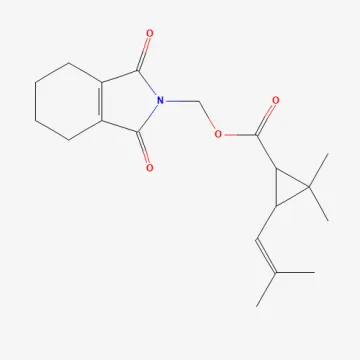
Tetramethrin
Description
Mode of action
Tetramethrin belongs to the chemical class of type I synthetic pyrethroids. This substance acts on the nervous system of insects, disrupting the permeability of sodium channels in nerve cell membranes.
As a result of the active component's action, membrane depolarization occurs, causing excessive excitation of nerve fibers. This leads to the rapid paralysis of the insect, known as the knockdown effect.
The active ingredient is characterized by a high speed of penetration into the pest's body upon contact. It effectively blocks the transmission of nerve impulses, which inevitably leads to the death of the individual in a short time.
Tetramethrin often serves as a component of combination products, where it is responsible for a quick knockdown effect, complementing the actions of other insecticides with a slower mode of action.
The substance has virtually no systemic effect and does not move through plant tissues, remaining on the surface of leaves and stems, which ensures immediate protection upon contact with pests.
What it targets
This substance is used to control a wide range of flying and crawling insect pests. In agricultural practice, it is effective against various species of Diptera, Lepidoptera, and Orthoptera.
The main targets include flies, mosquitoes, cockroaches, fleas, as well as various storage pests in warehouse facilities.
Products based on tetramethrin are often used in formulations for disinsection of areas around livestock complexes and in facilities for storing agricultural products.
The substance also shows activity against many types of garden pests that damage vegetative parts of crops during their active growth period.
- House flies and stable flies
- Mosquitoes and other blood-sucking insects
- Cockroaches and ants
- Grain storage pests
Rates and timing
The application rates of tetramethrin directly depend on the formulation and intended use. In aerosol mixtures, the substance concentration is usually a fraction of a percent for the rapid extermination of insects.
When used in field conditions or for treating storage facilities, the rates are determined according to the regulations of the specific manufacturer specified in the product instructions.
Waiting periods until harvest or the use of premises after treatment are set individually depending on the concentration and formulation of the active ingredient.
It is important to consider the temperature regime during application, as the effectiveness of pyrethroids can decrease at extremely high ambient temperatures.
To achieve optimal results, uniform application of the working solution to surfaces where the presence or movement of pests is most likely is recommended.
Restrictions
Tetramethrin is a moderately toxic compound to warm-blooded animals, so the use of personal protective equipment for skin, eyes, and respiratory organs is required when handling it.
The substance is extremely dangerous for bees and aquatic organisms, therefore, it is strictly forbidden to carry out treatment during the flowering period of honey plants and near water bodies or fisheries zones.
The product may exhibit photostability issues when exposed to direct sunlight, which limits its long-term protective effect in open areas.
Residues of the solution should be prevented from entering sewage, soil, and drainage systems to avoid environmental pollution.
Frequent use of the same product is not recommended to prevent the development of resistance in harmful insect populations; alternation with insecticides of other chemical groups is advised.
Status in the European Union
Not approved in the EU
- CAS number
- 7696-12-0
- Category (EU)
- IN - Insecticide
EU status is for reference only and does not replace national registration in your country.