
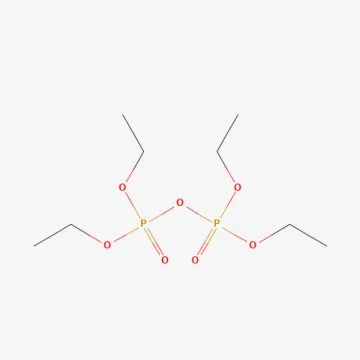
Tetraethyl pyrophosphate
Description
Mode of action
Tetraethyl pyrophosphate belongs to the organophosphorus class of chemicals, functioning as a potent inhibitor of the enzyme acetylcholinesterase.
The mechanism of action involves the permanent blockage of synaptic neurotransmission, leading to the accumulation of acetylcholine at the nerve synapses of pests.
This biochemical interruption causes rapid paralysis, convulsions, and death, which is why it was historically utilized for quick knockdown effects.
The substance possesses high contact activity and significant fumigant properties due to its volatility in various environmental conditions.
Rapid hydrolysis occurs upon exposure to water, which limits the residual stability of the substance in the field but contributes to its environmental degradation.
What it targets
Historically, this substance was employed as a highly effective insecticide and acaricide to manage various pest populations.
The primary targets included soft-bodied insects such as aphids, thrips, and various species of mites affecting vegetable and ornamental crops.
It was primarily used in greenhouse settings where rapid control of pests was required to prevent significant economic damage to crops.
The compound was effective against both adult stages and certain nymphal stages that were susceptible to organophosphorus neurotoxins.
However, due to the rapid development of resistance and the shift towards safer alternatives, its use in modern agriculture is virtually non-existent.
Restrictions
The primary constraint is the extreme acute toxicity to mammals and humans, as the substance is easily absorbed through the skin and respiratory system.
Strict safety protocols are mandatory, involving specialized personal protective equipment to prevent any form of contact or inhalation during application.
Environmental regulations prohibit the application near aquatic ecosystems due to high toxicity levels that can disrupt local biodiversity.
Storage requirements include secure, well-ventilated facilities to prevent the accidental release of toxic vapors, which could pose a risk to human health.
Due to its non-selective nature, it is not suitable for integrated pest management programs and has been widely replaced by more selective, lower-risk pesticides.
Status in the European Union
Not approved in the EU
- CAS number
- 107-49-3
- Category (EU)
- IN - Insecticide
EU status is for reference only and does not replace national registration in your country.