
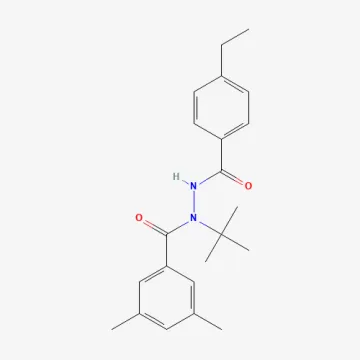
Tebufenozide
Description
Mode of action
Tebufenozide belongs to the diacylhydrazine chemical class. It functions as a unique ecdysone receptor agonist, effectively mimicking the action of an insect molting hormone.
The mode of action involves binding to ecdysone receptors, which are responsible for the molting process in insects. By activating these receptors, the substance induces a fatal effect.
Following exposure, the larvae undergo premature and incomplete molting. They stop feeding almost immediately after ingestion, leading to eventual death through starvation and dehydration.
A key characteristic of this insecticide is its high selectivity. It specifically targets the larval stages of Lepidoptera (butterflies and moths) while sparing beneficial insects and natural predators.
The substance exhibits primary stomach action and provides a degree of local systemic activity within the plant, offering long-lasting residual protection against target pests.
What it targets
Tebufenozide is utilized to control a broad spectrum of pests within the Lepidoptera order. The primary targets include caterpillars of various moths, leafrollers, and fruitworms.
This insecticide is an effective tool for integrated pest management in orchards, vegetable production, and various row crops, helping to reduce reliance on broad-spectrum chemistry.
The most vulnerable stage for pest control is the early larval instar. Once the larvae reach later stages, the efficacy of the substance is significantly reduced.
It provides an essential alternative for controlling populations of pests that have developed resistance to organophosphate and pyrethroid insecticides.
- Codling moth
- Grape berry moth
- Cabbage moth
- Cotton bollworm
- Leafminers and various other Lepidoptera
Rates and timing
Timing is critical for the effective application of tebufenozide. Treatments must be timed to coincide with the peak hatching period of the larvae to ensure maximum mortality.
Application rates vary depending on the crop type and the specific pest pressure. It is essential to adhere to the dosage guidelines specified on the product label.
Thorough coverage of the foliage is necessary for success, as the substance must be ingested by the larvae to initiate the molting disruption process.
The number of seasonal applications should be limited to prevent the development of resistance. Rotating tebufenozide with different modes of action is highly recommended.
Environmental conditions during application should be favorable. Excessive rainfall shortly after application or extreme temperatures can influence the overall performance of the product.
Restrictions
Tebufenozide is generally considered to have low toxicity to mammals, birds, and beneficial insects, making it suitable for modern sustainable agricultural practices.
Appropriate personal protective equipment must be worn during the handling and application of the product to prevent skin, eye, or respiratory contact.
Proper disposal of container residues and leftover spray mixture is mandatory. Do not contaminate water sources, drainage systems, or the surrounding environment.
Storage should be in a cool, dry, and well-ventilated area, securely isolated from food, animal feed, and areas accessible to children or pets.
When applying to new crop varieties, it is advisable to test the product on a small scale first to ensure that no unexpected phytotoxic reactions occur.
Status in the European Union
Approved in the EU
- CAS number
- 112410-23-8
- Category (EU)
- IN - Insecticide
- Approved from
- 01.06.2011
- Approval until
- 31.01.2027
- ADI
- 0.02 mg/kg bw/day
- ARfD
- Not appl.
- AOEL
- 0.008 mg/kg bw/day
EU status is for reference only and does not replace national registration in your country.