
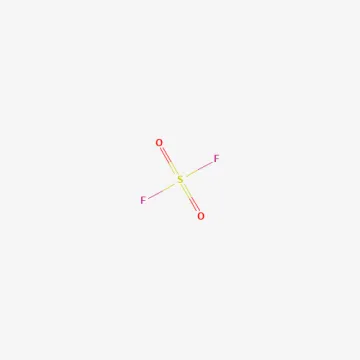
Sulfuryl fluoride
Description
Mode of action
Sulfuryl fluoride is a highly effective inorganic gas used extensively as a fumigant to control a broad spectrum of pests. Its primary mode of action involves the rapid disruption of cellular metabolism in target organisms, leading to lethal energy depletion.
The substance acts as a potent inhibitor of glycolysis and the Krebs cycle. By infiltrating the respiratory system of insects, sulfuryl fluoride effectively blocks the production of ATP, resulting in the death of all developmental stages, from eggs and larvae to adult insects.
A key property of sulfuryl fluoride is its superior penetrability. Unlike many conventional fumigants, this gas is capable of diffusing deep into complex structures, including seasoned wood, dense agricultural commodities, and tightly packed storage units.
The gas is colorless and odorless, necessitating the use of specialized sensing equipment to monitor concentration levels during application to ensure the process remains within established safety and efficacy parameters.
Compared to other common fumigants, sulfuryl fluoride offers consistent efficacy across a range of environmental conditions while remaining chemically inert toward most household materials, electronics, and structural surfaces.
What it targets
Sulfuryl fluoride is primarily used for the whole-site fumigation of warehouses, grain silos, flour mills, and various industrial facilities. It is highly effective against stored-product pests, including beetles, weevils, and various species of moths.
It is the industry standard for the structural control of wood-destroying organisms, such as powderpost beetles, termites, and wood-boring wasps, protecting both historic structures and valuable timber assets.
The chemical is also utilized for the eradication of urban pests, including bed bugs, cockroaches, and ants, providing a comprehensive solution when other methods of pest management fail to reach hidden harborages.
Through total-volume fumigation, sulfuryl fluoride eliminates infestations in the most inaccessible cracks and crevices, ensuring a high degree of mortality across entire pest populations.
Its fast-acting nature and high efficacy make it an essential tool for quarantine treatments, ensuring that imported or exported goods are free from regulated insect pests without damaging the product quality.
Rates and timing
Application rates for sulfuryl fluoride are determined by calculating the specific gas concentration required for the target pest at a given temperature, exposure time, and the volume of the space being treated.
Exposure durations can range from several hours to multiple days. Maintaining the target concentration throughout the duration of the fumigation cycle is essential for achieving a successful outcome and ensuring complete pest control.
Proper site preparation, including rigorous sealing of the area, is mandatory before the gas is introduced. Monitoring equipment is used to ensure the concentration remains consistent within the target zone and that there are no leaks into surrounding areas.
Once the fumigation process is complete, a thorough aeration period is required to vent the gas safely. The facility must remain secured until air quality testing confirms that residue levels have dropped below safe threshold limits.
All fumigation procedures must be conducted by licensed professionals who have the necessary expertise in gas handling and safety compliance to protect both the workers and the environment.
Restrictions
Sulfuryl fluoride is a highly toxic substance requiring strict adherence to safety protocols. Its use is strictly regulated, and operators must utilize appropriate respiratory protection and personal protective equipment at all times.
There are specific limitations regarding its use on certain food products, particularly those with high fat or oil content, as they may absorb the gas and retain residues beyond permissible regulatory limits.
Fumigation cannot be performed in areas where airtight sealing is impossible to achieve, as uncontrolled leakage poses significant risks to nearby occupants and the surrounding environment.
Operators must conduct a pre-application assessment to identify any materials within the treatment zone that might be sensitive to the gas, although such cases are relatively rare compared to other types of fumigants.
Continuous monitoring of adjacent areas is a non-negotiable safety requirement to ensure the integrity of the treatment area and the safety of personnel during the fumigation and subsequent aeration phases.
Status in the European Union
Approved in the EU
- CAS number
- 2699-79-8
- Category (EU)
- IN - Insecticide
- Approved from
- 01.11.2010
- Approval until
- 31.01.2027
EU status is for reference only and does not replace national registration in your country.