
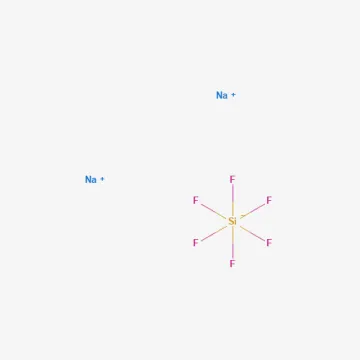
Sodium fluosilicate
Description
Mode of action
Sodium fluorosilicate is an inorganic compound belonging to the fluoride family, widely recognized for its efficacy as a stomach poison insecticide. Its primary utility is to eliminate pests that cause structural damage to plant tissues.
The mechanism of action is triggered when the insect ingests the treated plant material. Once in the gut, the compound releases fluoride ions, which disrupt the fundamental metabolic processes within the insect's cells.
Specifically, these ions inhibit essential enzymes such as enolase, effectively halting glycolysis and cellular energy production. This metabolic failure leads to the rapid cessation of feeding, which is a crucial advantage for protecting crop foliage.
As the poisoning progresses, the insect loses muscle control and becomes paralyzed. While primarily acting as a stomach poison, the substance may exhibit some contact activity if it adheres significantly to the insect's exoskeleton.
The compound remains stable on leaf surfaces for an extended period, provided environmental conditions are favorable. Its residual activity is highly valued in scenarios where immediate pest suppression is required alongside lasting protection.
What it targets
This substance is specifically targeted at chewing insects, including various species of beetle larvae, lepidopteran caterpillars, and orthopterans. These pests are susceptible because their feeding habit ensures high levels of ingestion.
Sodium fluorosilicate is traditionally effective against locusts and grasshoppers, which can strip agricultural fields of vegetation. It provides a reliable solution for mitigating the impact of these swarming insects.
Furthermore, it is used in agricultural and storage settings to control soil-dwelling pests, such as mole crickets, usually delivered via baiting systems where insects are naturally attracted to the food source.
The chemical is also relevant for managing pests that feed on foliage, such as leaf-eating beetles. It is applied when the pest population reaches an economic threshold that threatens the overall vitality of the crop.
It is important to note that this active ingredient is not effective against sucking pests, such as aphids, whiteflies, or mites, as their specialized mouthparts do not ingest the solid particles containing the insecticide.
Rates and timing
Application rates for sodium fluorosilicate are determined by the intended method, whether as a spray suspension or as an incorporated bait. Precision is required to maintain the effective dosage while preventing over-application.
When preparing bait, the chemical must be mixed with an attractant, such as bran or crushed grains. The ratio is critical to ensure that the bait remains attractive while delivering a lethal dose upon consumption.
Timing is key to the success of this insecticide. Applications should coincide with the peak periods of larval activity or when adults emerge, ensuring the substance is present when feeding pressure is at its maximum.
Environmental factors must be considered during application. Heavy rainfall following the treatment can wash the compound off the leaves, significantly reducing its residual efficacy and potentially necessitating re-application.
For field applications, the total volume of the carrier solution must be calculated to provide uniform coverage across all vegetation, ensuring that the target pests inevitably come into contact with the poison while feeding.
Restrictions
Sodium fluorosilicate is classified as moderately toxic to mammals and humans. Rigorous adherence to safety protocols, including the use of respiratory protection, gloves, and protective clothing, is mandatory during handling.
Application is strictly prohibited during the blooming stage of crops. The high toxicity to honeybees and other vital pollinators makes this an essential restriction to protect biodiversity and ensure the success of subsequent crop yields.
Avoid applying the pesticide near aquatic environments, such as streams or ponds, to prevent runoff that could adversely affect fish and other non-target aquatic organisms found in the drainage area.
Phytotoxicity is a potential risk if the concentration exceeds the recommended levels. Over-treatment can cause localized leaf burning and stunting, which may offset the benefits gained from pest control.
All stocks must be stored in a cool, dry place in original containers. Keep the substance away from food supplies, feed storage, and livestock areas to prevent accidental ingestion and environmental contamination.
Status in the European Union
Not approved in the EU
- Category (EU)
- IN - Insecticide
EU status is for reference only and does not replace national registration in your country.