
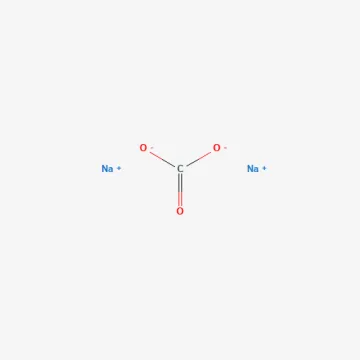
Sodium carbonate
Description
Mode of action
Sodium carbonate (soda ash) belongs to the group of inorganic compounds with strong alkaline properties. In agronomy, it is used as a contact active substance capable of altering the pH level on the surface of plant leaves and stems.
The mechanism of action is based on creating an alkaline environment that is unfavorable for pathogens. A high pH level destroys the cell membranes of fungal mycelium and damages the soft tissues of pests, causing dehydration and subsequent death.
Due to its contact nature, the substance has no systemic action and does not penetrate plant tissues, making it relatively safe for the future harvest when applied correctly.
Unlike specific pesticides, sodium carbonate exhibits physical and chemical activity, which significantly reduces the risk of resistance developing in disease pathogens and harmful insects.
Preparations based on it are often used as auxiliary components for correcting water hardness, which increases the effectiveness of tank mixtures with other pesticides.
What it targets
The primary use of sodium carbonate in crop production is the control of fungal diseases, particularly powdery mildew (Erysiphaceae).
It is successfully used against powdery mildew on cucumbers, zucchini, gooseberries, currants, and roses, where the alkaline environment prevents the spread of fungal spores.
For insecticidal purposes, the substance effectively acts on soft-bodied pests such as aphids, whiteflies, and spider mites by destroying their protective coverings upon direct contact.
The agent is often included in integrated pest management (IPM) programs for orchards and vegetable gardens during the growing season when the first signs of infestation appear.
- Powdery mildew (Sphaerotheca mors-uvae, Erysiphe cichoracearum)
- Aphids (Aphidoidea)
- Whiteflies (Aleyrodidae)
- Spider mites (Tetranychidae)
Rates and timing
Working solutions are prepared immediately before use. The standard concentration for spraying ranges from 0.5% to 1% (50–100 grams per 10 liters of water).
To improve adhesion and prolong the effect, laundry soap or specialized surfactants are often added to the solution, which increases the retention of the mixture on the leaves.
Applications should be carried out in dry, calm weather, preferably during morning or evening hours, to avoid leaf scorch caused by the alkaline reaction under intense sunlight.
The interval between applications is typically 7–10 days, depending on the intensity of the infection pressure or the size of the pest population.
The frequency of applications per season is not strictly limited, although it is recommended to rotate sodium carbonate with other products to achieve maximum agrotechnical results.
Restrictions
The main limitation is phytotoxicity when recommended concentrations are exceeded, which can lead to damage to leaf blades and burns on crop plants.
The product is incompatible with most biological fungicides, as the alkaline environment is detrimental to the spores of beneficial fungi and bacteria used in biological control.
When used in tank mixtures with pesticides, their stability must be checked, as changes in pH can trigger precipitation or rapid degradation of the primary active ingredient.
It is not recommended to apply during the flowering period to avoid negative effects on pollinators and delicate flower petals.
It is important to use personal protective equipment, as concentrated sodium carbonate can cause irritation to mucous membranes and skin when handling the powder.
Status in the European Union
Not approved in the EU
- CAS number
- 497-19-8
EU status is for reference only and does not replace national registration in your country.