
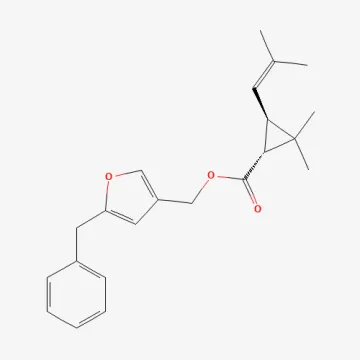
Resmethrin
Description
Mode of action
Resmethrin is a synthetic pyrethroid insecticide belonging to the first generation of this chemical class. It acts as a contact and stomach poison, noted for its rapid knockdown effect on a wide range of insect pests.
The mode of action involves the disruption of sodium channel function in the nerve cell membranes of insects. This interference causes prolonged excitation, leading to paralysis and the eventual death of the target organism.
As a photolabile substance, resmethrin degrades quickly when exposed to sunlight. This characteristic limits its effectiveness for long-term outdoor use compared to more stable, modern pyrethroid alternatives.
It exerts high insecticidal activity against both adult insects and various larval stages. By interrupting the nervous system immediately upon contact, it effectively halts feeding and movement in affected pests.
Resmethrin is frequently formulated with synergists like piperonyl butoxide to inhibit the insect's detoxifying enzymes, thereby significantly increasing the overall efficacy of the treatment.
What it targets
Resmethrin has a broad spectrum of insecticidal action, effective against various flying and crawling insects including dipterans, coleopterans, and certain lepidopterans.
In the agricultural sector and warehousing, it is used to manage stored-product pests. It is highly effective against grain weevils, flour beetles, and various moth species that infest storage facilities.
Beyond agricultural uses, it is a common ingredient in domestic and industrial pest control products, targeting mosquitoes, flies, wasps, and cockroaches in urban and sanitary environments.
Since resmethrin does not have systemic activity, its efficacy relies heavily on thorough and uniform coverage of the surfaces or target insects. Direct contact is essential for optimal performance.
The substance is often preferred in scenarios requiring rapid knock-down capabilities without leaving excessive long-term toxic residues in processed indoor environments.
Rates and timing
Application rates for resmethrin vary depending on the product formulation, such as aerosols, emulsifiable concentrates, or ultra-low volume (ULV) sprays. Dosing is typically calculated based on the volume of the space being treated.
Re-entry intervals for treated areas depend on the concentration and ventilation conditions, generally ranging from a few hours to a full day after the application process is complete.
When preparing working solutions, it is crucial to use neutral water, as alkaline conditions can lead to the rapid degradation of the active ingredient, reducing its insecticidal potential.
Regular monitoring of pest populations is recommended to determine the timing and frequency of treatments, ensuring adherence to the specific product label requirements.
Applications should be performed using calibrated equipment to ensure that the droplet size is optimized for the intended target, maximizing the biological impact while minimizing wastage.
Restrictions
Resmethrin is highly toxic to aquatic life, including fish and aquatic invertebrates. Strict precautions must be taken to prevent any runoff into waterways, ponds, or drainage systems.
The substance poses a significant risk to bees and other beneficial pollinators. Application must be avoided in areas where bees are actively foraging to prevent adverse environmental impact.
Personnel handling the chemical must wear appropriate personal protective equipment (PPE), including respiratory protection, gloves, and eye protection, to avoid dermal or inhalation exposure.
Storage requirements include keeping the product in its original, sealed container in a cool, dry, and well-ventilated area away from food, feed, and potential sources of ignition.
- Do not apply in temperatures exceeding +30°C.
- Avoid exposure to direct sunlight for prolonged periods.
- Keep away from children and unauthorized persons.
Status in the European Union
Not approved in the EU
- CAS number
- 28434-01-7
- Category (EU)
- IN - Insecticide
- ADI
- 0.03 mg/kg bw/day
EU status is for reference only and does not replace national registration in your country.