
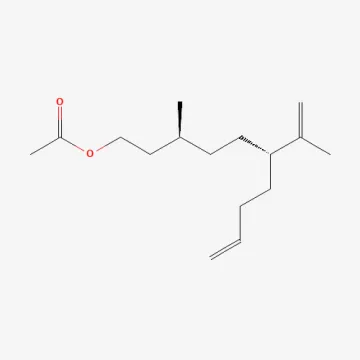
Rescalure
Description
Mode of action
Rescalur is a complex insecticidal active ingredient that affects the nervous system of target pests. Its mechanism is based on blocking the transmission of nerve impulses, which leads to paralysis and subsequent death of insects within a short period of time.
The substance is characterized by a pronounced contact-intestinal action. This means that to achieve the effect, the pest must either come into contact with the treated surface of the plant or consume parts of the tissues containing the preparation as food.
The action of Rescalur begins almost immediately after contact. Shortly after spraying, insects stop feeding, which prevents further damage to crops and the spread of viral diseases transmitted by pests.
The product has the ability to penetrate the upper layers of the leaf epidermis, providing a certain translaminar effect. This increases the resistance of protection to adverse weather conditions, in particular to being washed off by precipitation.
The duration of the protective effect depends on weather factors and the intensity of the pest population development. On average, the product provides reliable control for two weeks, maintaining activity at different temperature regimes.
What it targets
Rescalur effectively destroys a wide range of harmful insects from the orders Hemiptera, Lepidoptera, and Coleoptera. Its use is justified against sucking and chewing pests that cause the main economic damage to the agro-industrial complex.
The main targets are various species of aphids that damage vegetable, grain, and fruit crops. The preparation successfully deals with colonies of pests even when their population density is high during the active growing season.
Rescalur also shows high effectiveness in fighting thrips, which are difficult to control with other insecticides due to their hidden way of life. The preparation penetrates into the places of insect accumulation, ensuring high-quality cleaning of crops.
Application against weevils and other coleopterans allows protecting sugar beet, rapeseed, and sunflower crops. This is critically important during the germination period, when plants are most vulnerable to mechanical damage by pests.
The wide spectrum of action of the product makes it a universal tool in anti-resistance protection programs. With proper rotation with other classes of insecticides, it is possible to prevent the development of drug resistance in insect populations.
Rates and timing
Application rates vary depending on the type of crop, the degree of field infestation, and the pest development phase. The standard working concentration is selected by an agronomist based on the manufacturer's recommendations for a specific climatic zone.
Spraying is recommended in the morning or evening hours with minimum wind speed. This allows reducing product losses due to drift and ensuring more uniform coverage of the leaf surface with the working solution.
The waiting periods until harvest are strictly regulated and are usually from 20 to 30 days. This time is necessary for the complete breakdown of active substances in plant tissues and to ensure the safety of products for the final consumer.
To prepare the working solution, it is necessary to use clean water. It is recommended to first prepare a stock solution and then, with constant stirring, pour it into the main volume of water in the sprayer tank.
It is important to take into account the development phase of the crop: treatment during the active growth period, when pests begin to colonize crops en masse, is considered the most effective. Carrying out preventive treatments significantly reduces the costs of pest control.
Restrictions
The use of Rescalur requires strict adherence to personal safety measures. Work with the product should be carried out using personal protective equipment for the skin, respiratory tract, and eyes, excluding any contact of the chemical with the body.
It is forbidden to carry out treatments near apiaries and water bodies. The product has pronounced toxicity to honey bees and other beneficial pollinating insects; therefore, application of the insecticide is strictly limited during the flowering period.
It is not recommended to carry out treatment at an air temperature above 25–28 degrees Celsius, as this reduces the effectiveness of the impact and accelerates the degradation of active substances under the influence of ultraviolet radiation.
Another limitation is the need to comply with sanitary zones during aerial or ground treatments near populated areas. All work must be carried out taking into account the current environmental standards of the region.
- Store in dry, cool, and childproof places.
- Do not allow the product to enter sewage or soil reservoirs.
- Dispose of containers in accordance with local legislation on pesticide management.
Status in the European Union
Approved in the EU
- CAS number
- 67601-06-3
- Category (EU)
- IN - Insecticide
- Approved from
- 18.12.2015
- Approval until
- 18.05.2028
- ADI
- Not appl.
- ARfD
- Not appl.
- AOEL
- Not appl.
EU status is for reference only and does not replace national registration in your country.