
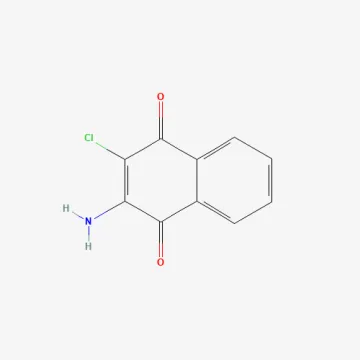
Quinoclamine
Description
Mode of action
Quinoclamine functions as a contact herbicide belonging to the quinoline derivative class, primarily used to manage unwanted plant growth in crops.
The mode of action involves the inhibition of photosynthesis within plant cells, specifically disrupting electron transport in photosystem II.
Upon application, the substance causes the rapid accumulation of reactive oxygen species, leading to the destruction of cellular membranes and chloroplasts.
As a contact agent, it does not translocate within the plant, meaning efficacy depends heavily on the thoroughness of the spray coverage on the leaves.
The compound is effective under sunny conditions, where light-mediated biochemical processes accelerate the herbicidal impact on target weeds.
What it targets
This group of active ingredients is primarily utilized for the control of various broad-leaved weeds and specific grass species in agricultural settings.
It is most effective when targeting young weeds at the seedling stage or during their initial growth phases (the 2- to 4-leaf stage).
Commonly targeted species include key arable weeds that compete for sunlight, soil nutrients, and moisture during the early stages of crop development.
The compound is particularly valued for its ability to suppress weeds that have developed resistance to more commonly used systemic herbicides.
Strategic use allows growers to maintain cleaner fields and improve yield quality by eliminating competitive pressure during critical growth windows.
Rates and timing
Application rates for Quinoclamine are determined by the specific weed spectrum present in the field and the growth stage of the vegetation.
It is recommended to apply the product during periods of active plant growth to ensure maximum uptake and efficacy.
The use of appropriate nozzle types is essential to achieve a fine, uniform spray pattern that provides sufficient coverage of the leaf surfaces.
Environmental conditions, such as temperature and humidity, play a significant role in the herbicide's activity; optimal results occur in moderate weather.
Growers should consult local label recommendations regarding water volumes and the necessity of tank-mix additives to ensure consistent field performance.
Restrictions
Strict adherence to safety protocols is required, including the use of protective gloves, masks, and eye goggles to prevent direct chemical exposure.
The substance should be handled with care to prevent environmental contamination, particularly avoiding runoff into ponds, streams, or drainage ditches.
Weather conditions must be monitored before spraying to avoid wind drift, which could damage nearby sensitive crops or non-target vegetation.
- Store in original containers in a cool, dry, well-ventilated location.
- Follow specific re-entry intervals before allowing field access post-application.
- Ensure proper disposal of empty containers according to regional environmental regulations.
In the event of accidental skin or eye contact, the area must be flushed with plenty of water and immediate medical advice should be sought.
Status in the European Union
Not approved in the EU
- CAS number
- 2797-51-5
- Category (EU)
- AL - Algicide
- ADI
- 0.002 mg/kg bw/day
- ARfD
- 0.05 mg/kg bw
- AOEL
- 0.03 mg/kg bw/day
EU status is for reference only and does not replace national registration in your country.