
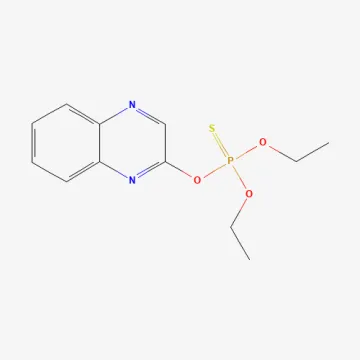
Quinalphos
Description
Mode of action
Quinalphos belongs to the organophosphate chemical class. It acts as a powerful broad-spectrum insecticide and acaricide used in various agricultural systems.
The mode of action involves the inhibition of the enzyme acetylcholinesterase in the nervous system of the target insects, leading to paralysis and death.
The substance exhibits both contact and stomach poison action, which makes it highly effective against a wide variety of feeding pests on crops.
It possesses moderate systemic properties, allowing for control over pests that are partially protected by foliage or reside within plant tissues.
Because of its chemical stability, it provides a reliable residual effect that helps to manage pest pressure over a significant period after application.
What it targets
Quinalphos is used to protect diverse crops such as cotton, paddy, fruits, vegetables, and cereals from complex pest infestations.
It is specifically targeted at chewing and sucking insects that cause significant damage to the plant's vegetative and reproductive parts.
Key targets include various caterpillar species, beetles, aphids, thrips, and mites that affect crop quality and total yield productivity.
It is often used as a solution to combat pest populations that have developed resistance to synthetic pyrethroids or other older pesticide classes.
- Lepidoptera (caterpillars)
- Coleoptera (beetles and weevils)
- Hemiptera (aphids, bugs)
- Thysanoptera (thrips)
Rates and timing
The dosage of quinalphos depends on the target crop, the severity of the pest outbreak, and the developmental stage of the targeted insect species.
Typical application rates range from 0.5 to 1.5 liters per hectare of the formulated product, depending on the specific concentration and manufacturer recommendations.
Field application should be timed according to the Economic Threshold Level (ETL) to ensure the cost-effectiveness and efficiency of the treatment.
Uniform spraying is essential to ensure maximum coverage of the plant surface, ensuring that the pest comes into contact with the active ingredient.
It is recommended to integrate this insecticide into a wider pest management strategy and avoid frequent consecutive applications on the same field.
Restrictions
Quinalphos is highly toxic to honeybees and other beneficial predatory insects; therefore, application during the flowering stage is strictly prohibited.
Users must wear appropriate personal protective equipment (PPE), including respirators and protective gloves, during mixing and field application procedures.
Adherence to the Pre-Harvest Interval (PHI) is critical to ensure that residue levels in the final agricultural product remain within safe legal limits.
In certain climate conditions, high temperatures or improper formulation might lead to phytotoxicity; thus, guidelines on mixing must be strictly followed.
Store the product in a cool, dry, well-ventilated location, clearly labeled and kept away from reach of children and domestic animals.
Status in the European Union
Not approved in the EU
- CAS number
- 13593-03-8
- Category (EU)
- IN - Insecticide
EU status is for reference only and does not replace national registration in your country.