
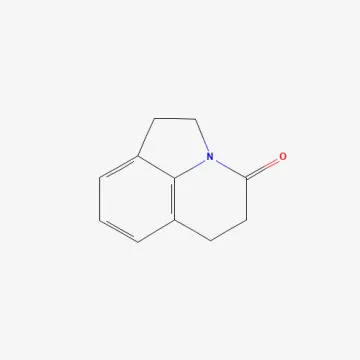
Pyroquilon
Description
Mode of action
Pyroxylon constitutes a group of active ingredients categorized as pigment biosynthesis inhibitors. These compounds specifically disrupt the metabolic processes responsible for carotenoid synthesis within plant cells.
By inhibiting the formation of these essential pigments, the herbicides cause a rapid breakdown of photosynthesis. The affected weeds exhibit characteristic chlorosis, tissue bleaching, and eventually succumb due to the inability to generate metabolic energy.
These substances possess systemic properties, allowing them to be absorbed by leaves or roots and translocated throughout the weed's vascular system. This enables the effective control of even established weeds by reaching active growth points.
A key attribute of Pyroxylon is its residual soil activity. Once applied, the compound creates a chemical barrier in the topsoil, effectively suppressing the germination and early development of subsequent flushes of weeds.
This group provides high selectivity, making it suitable for use in specific field crops. When applied according to technical requirements, it minimizes stress to the crop while maximizing pressure on the competing weed species.
What it targets
The primary purpose of Pyroxylon-based herbicides is the control of a wide range of annual broad-leaved weeds. These herbicides are particularly effective against species that commonly infest major agricultural crops.
Target weeds include species like pigweed, knotweed, and lamb's quarters. When applied at the correct developmental stage, these herbicides demonstrate high consistency in suppressing target populations.
These products are frequently used in maize and small grain cereal crops. Their application helps protect the crop during the most critical early growth stages, ensuring better stand establishment and yield potential.
While primarily focused on broad-leaved weeds, some formulations within this group exhibit activity against specific grass weeds at very early growth stages, broadening the spectrum of controlled species.
Effective weed management with Pyroxylon helps reduce nutrient and moisture depletion in the field, allowing the cultivated crop to grow in an environment with minimal competition for critical resources.
Rates and timing
Application rates for herbicides in this group depend heavily on soil type, weed density, and specific crop requirements. Farmers should refer to the manufacturer's label for precise instructions tailored to their specific conditions.
Optimal timing is crucial for success. Treatments are generally most effective when target weeds are in the seedling stage, specifically between the cotyledon and two-leaf developmental phases.
Standard application volumes typically range from 200 to 300 liters per hectare, depending on the type of spray equipment used. Achieving uniform coverage across the leaf surface is essential for maximum absorption.
Environmental conditions significantly influence performance. Applications should ideally be avoided during high-temperature periods or high winds to prevent off-target drift and evaporation before the product is absorbed.
In cases of dry weather, the efficacy might be slightly reduced. Some guidelines suggest using specialized adjuvants to enhance penetration and ensure the active ingredient reaches the site of action effectively.
Restrictions
Safety is a priority when handling these chemicals. Operators must use appropriate personal protective equipment, including gloves, goggles, and respiratory masks, to prevent direct contact and inhalation.
Crop rotation restrictions are an essential consideration. Because some derivatives of Pyroxylon may persist in the soil, users must strictly adhere to planting intervals for subsequent crops to avoid phytotoxicity.
Strict precautions should be taken to prevent drift onto adjacent fields or non-target sensitive vegetation. Always monitor wind direction and speed prior to starting any spraying operation.
Storage must be in a secure, dry, and well-ventilated area, keeping products in their original containers. It is vital to keep all pesticides away from food, water sources, and out of reach of children or animals.
To mitigate the risk of weed resistance, it is advised to rotate the use of Pyroxylon herbicides with products possessing different modes of action, supporting sustainable integrated pest management practices.
Status in the European Union
Not approved in the EU
- CAS number
- 57369-32-1
- Category (EU)
- FU - Fungicide
EU status is for reference only and does not replace national registration in your country.