
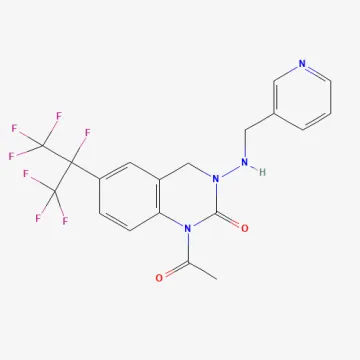
Pyrifluquinazon
Description
Mode of action
Pyrifluquinazon is a novel active ingredient belonging to the quinazolinone chemical class, specifically designed as a selective insecticide.
The mode of action of this compound is based on the suppression of chordotonal organs in insects. These organs are vital for sensing vibrations, orientation, and movement coordination.
Once exposed to the substance, pests lose their ability to feed and navigate properly. This rapid cessation of feeding acts as an anti-feedant, protecting crops from immediate physical damage and reducing the spread of vector-borne viruses.
The compound exhibits excellent systemic movement within the plant, ensuring that new growth remains protected for an extended period after application.
Because of its highly targeted mode of action, pyrifluquinazon is compatible with Integrated Pest Management (IPM) programs, maintaining high efficacy against target pests while exhibiting a favorable profile towards beneficial insect populations.
What it targets
The primary target organisms for pyrifluquinazon include various sucking insects that pose a significant threat to horticultural and field crops.
It is particularly effective against aphids (Aphididae), including populations that have developed resistance to traditional organophosphates or pyrethroids.
The insecticide is also highly potent against whiteflies (Aleyrodidae), which are notoriously difficult to control in greenhouse environments due to their rapid reproductive cycles.
Additionally, it provides control over various leafhoppers, which act as vectors for phytoplasma and virus-related plant diseases.
By effectively managing these pest populations, the substance helps stabilize crop yields and prevents the secondary damage caused by insect-transmitted plant diseases.
Rates and timing
Recommended application rates for pyrifluquinazon-based products depend on the crop type, growth stage, and the level of pest infestation present in the field or greenhouse.
The optimal timing for treatment is upon the detection of the first colonies of pests, aiming to disrupt the population cycle before it reaches economic injury levels.
To ensure high biological efficacy, thorough coverage of the plant surface is essential, particularly the undersides of leaves where sucking pests often congregate.
Spray applications should be conducted under stable environmental conditions, avoiding peak heat to ensure optimal uptake of the active ingredient into the plant tissue.
The number of applications per season is limited by resistance management protocols; growers should follow local guidelines to rotate modes of action appropriately.
Restrictions
Standard safety protocols must be followed when handling pyrifluquinazon, including the use of protective clothing, gloves, and respiratory protection to prevent exposure.
Do not apply the product in proximity to water bodies or in conditions that promote spray drift to non-target areas or water sources.
Store the product in its original, sealed container in a cool, dry, and well-ventilated location, keeping it away from food, beverages, and animal feed.
While the substance is generally considered safer for beneficial insects than many broad-spectrum insecticides, care should be taken to minimize direct exposure to pollinating bees during bloom.
All disposal of leftover spray mixtures or empty containers must be handled in strict accordance with national regulations to protect the environment.
Status in the European Union
Not approved in the EU
- CAS number
- 337458-27-2
- Category (EU)
- IN - Insecticide
EU status is for reference only and does not replace national registration in your country.