
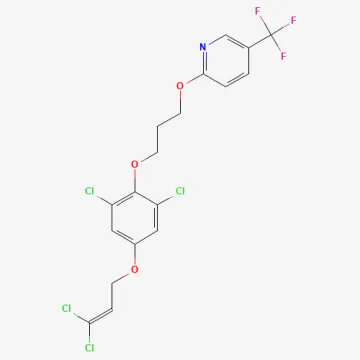
Pyridalyl
Description
Mode of action
Pyridalyl is a unique insecticide belonging to a distinct chemical class that operates through a novel mode of action compared to traditional neurotoxic insecticides. It works primarily by inhibiting protein synthesis in target insects, leading to their developmental failure and eventual death.
The compound exhibits both contact and ingestion activity, allowing it to penetrate the insect cuticle or be absorbed via feeding on treated plant tissues, ensuring broad efficacy against various life stages of pests.
A key advantage of Pyridalyl is its lack of cross-resistance with other established insecticide classes, such as pyrethroids or organophosphates, making it an essential tool for managing resistant pest populations.
After exposure, pests rapidly cease feeding, which significantly reduces the physical damage to crops even before the insects perish, providing an immediate protective benefit.
As a non-systemic insecticide, its performance is highly dependent on achieving uniform and thorough coverage of the plant surface during the application process to ensure contact with the target insects.
What it targets
Pyridalyl is specifically designed to control a wide range of Lepidoptera (caterpillars) and Thysanoptera (thrips), which are major economic threats to vegetable, fruit, and ornamental crops.
It is particularly effective against difficult-to-manage larvae such as various species of cutworms, loopers, and diamondback moths that have developed tolerance to other standard chemical treatments.
The product is widely used in greenhouse environments where high-pressure pest populations like whiteflies and thrips often render conventional insecticides ineffective due to rapid resistance buildup.
By targeting the younger instars of larvae, Pyridalyl provides effective prevention of future pest outbreaks, helping to maintain overall yield quality and quantity.
The selectivity of Pyridalyl towards harmful pests often allows for its inclusion in Integrated Pest Management (IPM) programs, preserving natural predator and parasite populations when applied correctly.
Rates and timing
Application rates for Pyridalyl vary significantly based on the specific crop type, the intensity of pest infestation, and the growth stage of the plants at the time of treatment.
The optimal timing for application is during the early stages of pest emergence, as young larvae are generally more susceptible to the active ingredient, ensuring maximum control.
Proper preparation of the spray solution is crucial; it must be thoroughly mixed to ensure the active ingredient is evenly distributed, preventing clogging of nozzles and ensuring uniform coverage.
To preserve the efficacy of the chemistry and manage resistance, it is recommended to limit the number of seasonal applications and rotate with insecticides having different modes of action.
Applications should be made during periods of low wind and moderate temperatures to reduce drift and minimize the risk of rapid drying before the product adheres to the plant tissue.
Restrictions
Safety is paramount when handling Pyridalyl; operators must utilize appropriate personal protective equipment (PPE), including gloves, long-sleeved clothing, and respiratory protection to prevent exposure.
Applications must be carefully timed to avoid harming pollinating insects, such as bees, particularly during bloom periods or when bees are actively foraging in the area.
Environmental stewardship requires avoiding runoff into water bodies or sewage systems, as the compound can be hazardous to aquatic life if not managed according to regulatory guidelines.
The product should be stored in its original, sealed container in a cool, dry, and well-ventilated area, safely away from food, animal feed, and out of the reach of unauthorized individuals.
In the event of accidental skin or eye contact, immediately flush the area with copious amounts of water and seek medical attention if any signs of irritation or systemic symptoms develop.
Status in the European Union
Not approved in the EU
- CAS number
- 179101-81-6
- Category (EU)
- IN - Insecticide
- Approved from
- 01.07.2014
- Approval until
- 30.06.2024
- ADI
- 0.03 mg/kg bw/day
- ARfD
- Not appl.
- AOEL
- 0.02 mg/kg bw/day
EU status is for reference only and does not replace national registration in your country.