
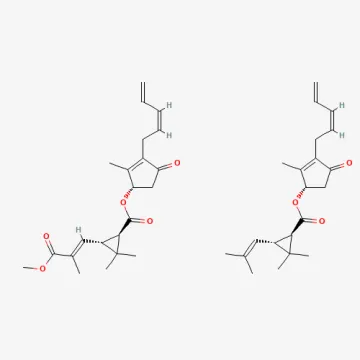
Pyrethrins
Description
Mode of action
Pyrethrins are a group of organic compounds of natural origin extracted primarily from the flowers of Chrysanthemum cinerariifolium. They represent a classic botanical insecticide class that has been used globally for its rapid knockdown effect on various insect pests.
The mode of action of pyrethrins is characterized by contact toxicity. Upon contact with the insect, these compounds penetrate the exoskeleton and target the nervous system, interfering with the sodium channels in nerve cell membranes. This disruption leads to paralysis and subsequent death.
A significant feature of pyrethrins is their high rate of decomposition when exposed to sunlight and elevated temperatures. While this limits their persistence in the field, it also ensures minimal environmental accumulation, making them suitable for sustainable agricultural systems.
Because pyrethrins break down rapidly, they are often formulated with synergists like piperonyl butoxide. These additives inhibit the insect's detoxifying enzymes, thereby enhancing the efficacy and prolonging the insecticidal impact of the active ingredient.
Pyrethrins function as non-systemic insecticides, meaning they do not move through the plant's vascular system. Consequently, they provide only immediate contact protection, which necessitates thorough application to ensure full coverage of the targeted crop areas.
What it targets
Pyrethrins are highly effective against a broad range of insect pests, including aphids, thrips, caterpillars in early larval stages, and various species of leafhoppers. They are widely utilized on vegetables, ornamental plants, and fruit trees.
Due to their short pre-harvest interval, pyrethrins are an excellent choice for late-stage pest management, allowing for effective control even shortly before crop collection without leaving harmful chemical residues.
In greenhouse operations, these compounds are highly valued for their ability to provide rapid knockdowns of pest populations. Their performance is generally superior in enclosed environments where they are protected from direct UV degradation.
However, pyrethrins are ineffective against internal feeders such as leaf miners, stem borers, or gall-forming pests, as they require direct physical contact to work. They are specifically intended for pests residing on the surface of leaves and stems.
They serve as a vital tool in integrated pest management (IPM) programs, where they can be used to suppress sudden pest outbreaks without relying on persistent, broad-spectrum synthetic chemicals.
Restrictions
The primary constraint in using pyrethrins is their sensitivity to photodegradation. To maximize efficiency, applications should always be performed during evening hours or under cloud cover to prevent the rapid breakdown of the active compounds by ultraviolet radiation.
Pyrethrins are highly toxic to honeybees and other beneficial pollinators. Therefore, it is strictly forbidden to apply these products while crops are in bloom, as this would pose an unacceptable risk to local beneficial insect populations.
Although they are naturally derived, users must follow rigorous safety protocols. Concentrated products can cause skin and respiratory irritation; thus, appropriate personal protective equipment including gloves and respirators must be used during mixing and application.
Great care must be taken to prevent drift into aquatic systems, as pyrethrins are extremely toxic to fish and aquatic invertebrates. Proper buffer zones should be maintained when applying near water bodies.
- Apply during cooler temperatures to improve residual effect.
- Ensure complete coverage of foliage for effective contact.
- Avoid mixing with alkaline materials that promote rapid hydrolysis.
Status in the European Union
Approved in the EU
- CAS number
- 8003-34-7
- Category (EU)
- IN - Insecticide
- Approved from
- 01.09.2009
- Approval until
- 30.04.2028
- ADI
- 0.04 mg/kg bw/day
- ARfD
- 0.2 mg/kg bw
EU status is for reference only and does not replace national registration in your country.