
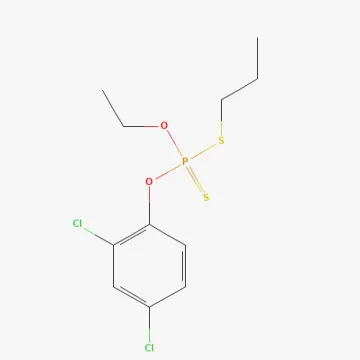
Prothiofos
Description
Mode of action
Prothiofos is a synthetic organophosphorus insecticide known for its potent contact and stomach activity. It is widely used in agriculture to control a broad range of insect pests.
The mode of action of prothiofos involves the inhibition of the enzyme acetylcholinesterase within the insect's nervous system. This disruption prevents the breakdown of neurotransmitters, causing continuous nerve impulses.
Once the nervous system is overwhelmed, the pest experiences paralysis, tremors, and inevitable death. The substance is effective at various stages of insect development, particularly against larvae.
Prothiofos exhibits systemic and translaminar properties, allowing it to penetrate plant tissues and provide protection for parts of the plant not directly covered during spraying.
As a highly active compound, it provides a quick knockdown effect, which is crucial for managing sudden pest outbreaks and preventing immediate crop damage.
What it targets
Prothiofos is effective against a variety of agricultural pests, including those belonging to the orders Lepidoptera, Coleoptera, and Hemiptera.
Common targets include aphids, leafhoppers, weevils, beetles, and various moth larvae that feed on cereal crops, vegetables, and technical crops.
It is specifically useful for controlling hidden pests, such as leaf-miners and larvae that feed within plant tissues, due to its ability to translocate within the plant structure.
Farmers utilize this substance to protect field crops during periods of high pest pressure, ensuring higher yields by minimizing biomass loss caused by insect feeding.
- Control of cereal leaf beetles and weevils in wheat and barley fields.
- Management of caterpillar infestations in vegetable gardens.
- Suppression of aphid populations to prevent secondary viral infections.
Rates and timing
Application rates for prothiofos vary significantly based on the crop type, pest species, and population density. Always refer to the product label for specific dosage instructions.
The working solution must be prepared just before application to maintain its chemical stability and efficacy. Consistent coverage of the foliage is essential for optimal results.
Applications should be timed based on economic thresholds. Scouting the fields to determine the growth stage of the larvae is key to selecting the most effective timing for spraying.
To avoid the development of pest resistance, prothiofos should be part of an integrated pest management (IPM) program that includes rotating insecticides from different chemical classes.
Always respect the recommended pre-harvest intervals (PHI) to ensure that crop residue levels remain within safe limits for consumption and trade.
Restrictions
Prothiofos is hazardous to bees and beneficial insects. Therefore, application is strictly prohibited during crop flowering periods to protect pollinators.
Buffers should be maintained between treated fields and sensitive areas, such as water bodies, residential zones, and animal grazing lands, to prevent environmental contamination.
Safety equipment is mandatory for all personnel involved in the mixing and application process, including respirators, gloves, and protective clothing to prevent dermal and inhalation exposure.
Storage must be in secure, well-ventilated, and clearly labeled areas that are inaccessible to unauthorized individuals and children. Temperature control is necessary to prevent degradation.
Disposal of unused pesticide and empty containers must be conducted in accordance with local environmental regulations to prevent harmful runoff into the ecosystem.
Status in the European Union
Not approved in the EU
- CAS number
- 34643-46-4
- Category (EU)
- IN - Insecticide
EU status is for reference only and does not replace national registration in your country.