
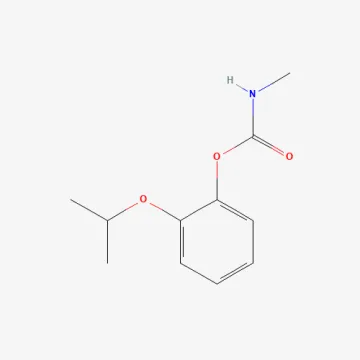
Propoxur
Description
Mode of action
Propoxur is a member of the carbamate chemical class and serves as a potent contact and stomach insecticide. It is designed to penetrate the chitinous layers of insects quickly, leading to rapid knockdown effects.
The primary mechanism of action involves the inhibition of the enzyme acetylcholinesterase within the insect's nervous system. This causes a buildup of acetylcholine, resulting in tremors, paralysis, and eventually the death of the pest.
One of the key characteristics of propoxur-based products is their ability to provide an immediate "knockdown" effect, rendering insects immobile shortly after they come into contact with treated surfaces.
The substance possesses significant residual activity, which allows for the long-term control of pest populations in various environments, including indoor and outdoor settings.
Propoxur is particularly valued for its efficacy against insect populations that have developed resistance to other common insecticide classes, such as organophosphates.
What it targets
Propoxur is widely utilized in both domestic pest control and specialized agricultural applications. It is highly effective against crawling insects such as cockroaches, ants, bed bugs, and fleas, helping to maintain hygiene in residential and commercial buildings.
In the agricultural sector, it is used to manage various sap-sucking pests, including aphids, thrips, and leafhoppers, particularly on ornamental and floral crops where immediate control is necessary.
It is also employed in livestock facilities for the control of flies and other ectoparasites, ensuring the health and welfare of animals by reducing the pressure from disease-carrying insects.
The substance can be used in storage facilities for treating empty equipment or surfaces, provided that specific product labels authorize such use to prevent the spread of stored-product pests.
- Cockroaches and ants
- Aphids on ornamental plants
- Thrips and leafhoppers
- Bed bugs and fleas
- House flies and other dipterans
Rates and timing
Application rates and timing for propoxur are strictly determined by the specific product formulation and the target pest species. Always refer to the manufacturer's label for accurate dosing requirements.
For indoor pest management, solutions are typically applied to surfaces where insects are known to travel or congregate, ensuring thorough coverage of potential hiding spots.
In greenhouse environments or ornamental plant nurseries, applications should occur at the first signs of infestation to prevent significant crop damage or the buildup of larger populations.
For livestock housing, treatment schedules should be carefully planned according to sanitation protocols to ensure effective pest control while maintaining a safe environment for the animals.
Mixing propoxur with highly alkaline substances should be avoided, as this chemical incompatibility can lead to the degradation of the active ingredient, reducing its insecticidal efficacy.
Restrictions
Propoxur is classified as moderately toxic to humans and other mammals; therefore, strict adherence to safety protocols is mandatory. Operators must wear appropriate personal protective equipment, including gloves, goggles, and respirators.
Treated areas must be properly ventilated before re-entry of people or pets. Application in areas where food is stored, prepared, or served must be strictly avoided to prevent contamination.
To mitigate the risk of resistance development, it is recommended to rotate propoxur with insecticides belonging to different chemical classes, such as pyrethroids or neonicotinoids.
The product is highly toxic to bees and aquatic organisms. Consequently, application during flowering periods or near open water sources is strictly prohibited to prevent environmental harm.
Store the product in its original, sealed container in a cool, dry, and well-ventilated area, ensuring it is kept away from children, food, and animal feed at all times.
Status in the European Union
Not approved in the EU
- CAS number
- 114-26-1
- Category (EU)
- IN - Insecticide
- ADI
- 0.02 mg/kg bw/day
EU status is for reference only and does not replace national registration in your country.