
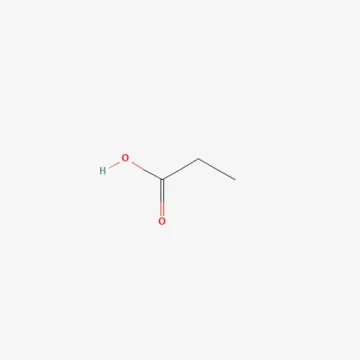
Propionic acid
Description
Mode of action
Propionic acid is a short-chain fatty acid that serves as a highly effective antifungal and antibacterial agent. It works by permeating the cell membranes of microorganisms, significantly lowering their internal pH and disrupting metabolic processes.
Upon entering the fungal cell, the acid molecules dissociate, which inhibits DNA replication and enzyme function. This rapid interference leads to the neutralization of spores and the cessation of vegetative fungal growth.
The substance acts primarily through contact, providing a protective coating on treated surfaces. Unlike systemic pesticides, it focuses on surface-level control, making it ideal for the preservation of harvested crops rather than protecting growing plants.
Propionic acid also creates an environment unsuitable for further infestation. It is a natural metabolite, meaning that when consumed by livestock, it is efficiently metabolized without leaving harmful chemical residues.
The success of the treatment relies heavily on the uniformity of application. Because it does not translocate, every part of the stored mass must come into direct physical contact with the acid to ensure total pathogen control.
What it targets
This substance is primarily used to control a wide range of mold species, including Aspergillus, Penicillium, and Fusarium. It is specifically recommended for high-moisture feed management.
Agronomists utilize this acid in storage facilities to protect grains, legumes, and oilseeds that are susceptible to moisture-induced spoilage. It is a critical tool for maintaining grain quality in humid climates.
It plays a key role in the preservation of hay and silage, preventing the overheating and spontaneous combustion often caused by thermophilic mold activity during the fermentation or drying process.
- Animal feed grains
- Hay and forage mixtures
- Silage production
- Poultry feed formulations
Furthermore, it is used for the sanitation of grain silos and transport containers, effectively eliminating residual fungal spores that could compromise the safety of new harvest batches.
Rates and timing
Application rates for propionic acid are strictly determined by the moisture content of the substrate. Products with higher moisture levels require significantly higher concentrations of the acid to prevent rapid mold proliferation.
The application is typically performed using automated dosing systems installed directly into the grain processing line or the harvester’s blower system. This ensures even distribution throughout the mass.
Periodic monitoring of moisture levels is essential during storage. If moisture fluctuates due to environmental factors, the treated mass may require additional assessment or intervention to maintain stability.
Producers must follow specific manufacturer guidelines, as dosage per ton of material is highly dependent on the target crop and the expected duration of storage.
It is crucial to avoid exceeding recommended dosages, as excessive acid levels can negatively impact the palatability of the feed, potentially leading to reduced intake by livestock.
Restrictions
A primary limitation is the high corrosivity of propionic acid towards ferrous metals. All application equipment must be composed of acid-resistant materials, such as high-density polyethylene (HDPE) or high-grade stainless steel.
Operators must wear appropriate personal protective equipment, including respirators and chemical-resistant gloves, due to the acid's sharp, pungent odor and its potential to irritate mucosal membranes.
Storage must be handled with care; containers should be kept in well-ventilated, cool areas away from heat sources to prevent the accumulation of potentially flammable vapors.
In the event of skin or eye contact, immediate flushing with large amounts of water is required to mitigate potential chemical burns. Safety protocols should be strictly enforced in all processing areas.
Mixing propionic acid with other agents should be avoided unless compatibility is verified, as unintended reactions may reduce the efficacy of the preservative or produce harmful byproducts.
Status in the European Union
Not approved in the EU
- CAS number
- 79-09-4
- Category (EU)
- FU - Fungicide
EU status is for reference only and does not replace national registration in your country.