
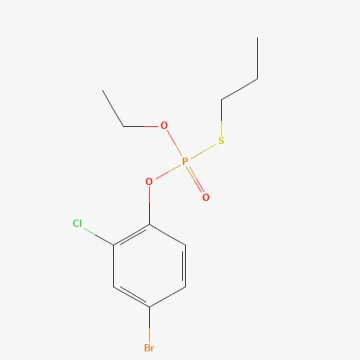
Profenofos
Description
Mode of action
Profenofos belongs to the organophosphate chemical class. It acts as a broad-spectrum insecticide and acaricide with contact and stomach action, possessing significant systemic-local activity within the plant tissue.
The mechanism of action involves the irreversible inhibition of the enzyme acetylcholinesterase in the insect's nervous system. This causes an accumulation of acetylcholine at the synapses, leading to uncontrolled nerve impulses, paralysis, and rapid death of the organism.
The compound is capable of penetrating plant tissues, allowing it to control pests located in difficult-to-reach areas, such as inside rolled leaves or plant stalks.
The chemical is characterized by high initial toxicity, providing a rapid knockdown effect immediately after surface treatment or ingestion by the insect.
Due to its ability to quickly penetrate the leaf cuticle, profenofos is less susceptible to washing off by rain, ensuring stable protection under variable weather conditions.
What it targets
Profenofos is a broad-spectrum insecticide effective against various pests, including Lepidoptera, Coleoptera, and spider mites.
Key targets for application include the cotton bollworm, various aphid species, thrips, leafminers, and spider mites.
It is particularly effective against hidden pests that damage the generative organs of plants, causing significant yield losses.
The substance is applied to a wide range of agricultural crops, including cotton, cereals, vegetables, and fruit orchards.
It plays a vital role in integrated pest management (IPM) programs, where a quick reduction in pest population levels is necessary within a short timeframe.
Rates and timing
The application rates of profenofos vary depending on the crop type, pest population density, and the growth stage of the plant.
The working solution is typically prepared to ensure full coverage of the leaf surface, which is critical for the contact action of the substance.
Pre-harvest intervals (PHI) are established according to local regulations and usually range from 20 to 30 days.
Repeat applications may be performed if necessary, but it is essential to rotate profenofos with insecticides from different chemical classes to prevent the development of pest resistance.
The optimal time for application is upon the first signs of pest infestation or when economic threshold levels are exceeded.
Restrictions
Profenofos is considered a highly hazardous substance to warm-blooded animals, bees, and aquatic organisms; therefore, strict adherence to safety protocols is mandatory.
The use of personal protective equipment for skin, respiratory organs, and eyes is essential during handling and application.
Spraying is strictly prohibited during periods of active bee foraging and near water bodies due to high toxicity to beneficial entomofauna.
It is not recommended to exceed the maximum number of treatments per season to minimize environmental impact and the risk of residue accumulation in agricultural products.
Storage must be strictly limited to the original factory packaging in dry, well-ventilated areas, preventing access by unauthorized personnel.
Status in the European Union
Not approved in the EU
- CAS number
- 41198-08-7
- Category (EU)
- IN - Insecticide
- ADI
- 0.03 mg/kg bw/day
- ARfD
- 1.0 mg/kg bw
EU status is for reference only and does not replace national registration in your country.