
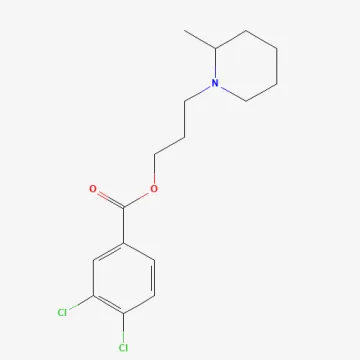
Piperalin
Description
Mode of action
Piperalin belongs to the piperidine class of chemical compounds. It acts as a systemic fungicide, providing protective and curative effects when applied to actively growing plant tissues.
The mechanism of action involves the inhibition of ergosterol biosynthesis within the fungal cells. Without this essential component, the fungal cell membranes lose their integrity and vital biological functions.
The compound rapidly penetrates plant tissues, ensuring long-lasting protection. Thanks to its systemic properties, piperalin translocates within the plant, safeguarding new growth that develops after the initial application.
This substance effectively suppresses mycelial growth and prevents spore germination on leaf and stem surfaces. It blocks infection progress at early stages, halting disease spread in greenhouses and open fields.
Piperalin is often utilized as a specialized agent that demonstrates high specific activity against pathogens that cause characteristic white powdery coatings on plant foliage and flowers.
What it targets
The primary use of piperalin is the management of powdery mildew fungi that affect a wide variety of plants. It shows high efficacy against a broad spectrum of pathogens within this order.
The product is actively used on ornamental crops, such as roses, chrysanthemums, and other greenhouse flowers, where powdery mildew poses a significant threat to aesthetic value.
It is also employed on agricultural crops susceptible to infection by fungi of the Erysiphaceae family. The agent helps preserve produce quality and prevents premature leaf drop caused by severe infections.
The target list includes various species of true powdery mildew. Piperalin effectively restricts disease development under conditions of high humidity and moderate temperatures.
Utilizing this compound allows growers to minimize crop losses and reduce damage to ornamental plants, maintaining their commercial appeal throughout the entire growing season.
Rates and timing
Application rates of piperalin depend on the severity of the infection and the specific crop species being treated. Typically, the product is applied as a spray solution to the foliage.
The frequency of applications is determined by the agronomist based on weather patterns and the pathogen's development rate. It is crucial to perform the first application at the first sign of disease.
Pre-harvest intervals and post-application reentry restrictions must be strictly observed in accordance with local regulations to ensure no harmful residues remain on the harvested produce.
For maximum efficacy, a uniform coverage of the leaf surface is recommended. Utilizing high-quality spray nozzles significantly enhances the biological effectiveness of the fungicide.
When incorporating into tank mixes, a compatibility test must be conducted with other pesticides and fertilizers to prevent potential precipitation or phytotoxicity issues.
Restrictions
Standard safety measures must be strictly followed when handling piperalin. The use of appropriate personal protective equipment, including respiratory, skin, and eye protection, is mandatory.
The product should be stored in its original packaging in a cool, dry place, protected from direct sunlight and kept out of reach of children and animals.
Special attention must be paid to protecting water bodies. Discharging leftover product or wash water into open water sources is strictly prohibited to avoid harm to aquatic life.
To prevent the development of resistance in pathogens, it is recommended to rotate the use of piperalin with fungicides that possess different modes of action against fungal cells.
In case of contact with skin or mucous membranes, immediately flush the affected area with large amounts of running water and seek medical attention if irritation persists.
Status in the European Union
Not approved in the EU
- CAS number
- 3478-94-2
- Category (EU)
- FU - Fungicide
EU status is for reference only and does not replace national registration in your country.