
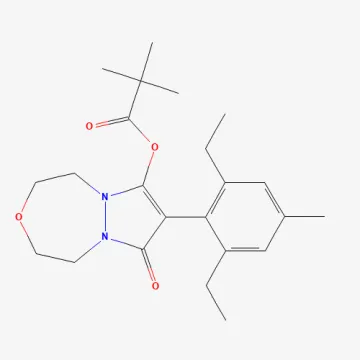
Pinoxaden
Description
Mode of action
Pinoxaden belongs to the phenylpyrazoline chemical class. It is a selective systemic herbicide that is rapidly absorbed by the leaves of target plants.
The mechanism of action involves the inhibition of the enzyme acetyl-CoA carboxylase (ACCase), which is essential for lipid synthesis in plant cells.
Once inside the plant, the active ingredient translocates through the phloem to the growing points, effectively halting cell division and meristematic tissue development.
Growth inhibition is usually observed within 48 hours after application, while complete weed death occurs within 2–3 weeks depending on environmental conditions.
Due to its high selectivity, pinoxaden-based products are safe for cereal crops, which possess the metabolic capacity to break down the active component quickly.
What it targets
Pinoxaden is designed to control a broad spectrum of annual grass weeds that compete with agricultural crops for water and vital nutrients.
Key target species include:
- Avena fatua (Wild oat)
- Alopecurus myosuroides (Black-grass)
- Apera spica-venti (Loose silky-bent)
- Echinochloa crus-galli (Barnyard grass)
- Setaria species (Foxtail)
The product demonstrates high biological efficacy even if weeds are slightly overgrown, although optimal control is achieved during early growth stages.
The substance is highly effective in cereal crop fields, ensuring field sanitation during critical periods of yield formation.
It is important to note that pinoxaden has no significant impact on broad-leaved weeds; therefore, it is often used in tank mixtures with appropriate herbicides.
Rates and timing
The application rate for pinoxaden-based herbicides depends on the active ingredient concentration and the specific composition of weeds present in the field.
The optimal application timing is the tillering stage of the crop when grass weeds are in the active growth phase (from 2 to 4 true leaves).
Application should be performed at air temperatures ranging from +5 to +25 degrees Celsius to achieve maximum herbicidal activity.
The spray volume must ensure uniform coverage of the leaf surface, which is critical for the systemic action of the herbicide.
Application is not recommended if the crop is under stress caused by drought, frost, or pest infestation.
Restrictions
Pinoxaden is characterized by a short pre-harvest interval, making it a flexible tool in intensive farming systems.
The product degrades rapidly in the soil, imposing no strict limitations on crop rotation in the following growing season.
When handling the substance, appropriate personal protective equipment for skin, respiratory organs, and eyes is required to prevent contact with the concentrate.
Contamination of water bodies must be avoided, as the substance may pose risks to certain aquatic organisms if regulations are not strictly followed.
Pinoxaden-based herbicides should be stored in dry warehouses at temperatures between 0 and +30 degrees Celsius in their tightly sealed original containers.
Status in the European Union
Approved in the EU
- CAS number
- 243973-20-8
- Approved from
- 01.07.2016
- Approval until
- 31.12.2029
- ADI
- 0.1 mg/kg bw/day
- ARfD
- 0.1 mg/kg bw
- AOEL
- 0.1 mg/kg bw/day
EU status is for reference only and does not replace national registration in your country.