
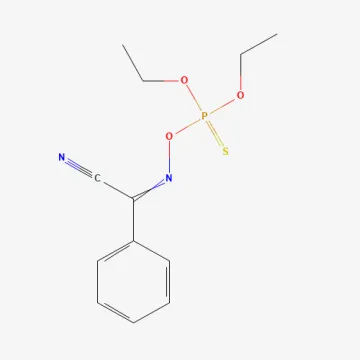
Phoxim
Description
Mode of action
Phoxim is a broad-spectrum organophosphate insecticide that acts through contact and ingestion, possessing significant fumigant properties in soil environments.
The core mechanism of action involves the inhibition of the enzyme acetylcholinesterase, which is essential for proper neural signal transmission in insects.
By preventing the breakdown of acetylcholine, the substance causes overstimulation of the nervous system, leading to paralysis and eventual death of the target pest.
Its high vapor pressure allows the chemical to diffuse through soil pores, effectively reaching subterranean pests that are difficult to target with conventional sprays.
The chemical is rapidly absorbed through the insect cuticle or ingested with plant tissues, resulting in a swift knockdown effect against various damaging populations.
What it targets
Phoxim is primarily utilized to control soil-dwelling insects and stored product pests that threaten both field crops and harvested agricultural commodities.
It is highly effective against wireworms, mole crickets, cutworms, and white grubs, which feed on seeds, roots, and stems of young plants.
In addition to field applications, it is widely employed in grain storage facilities to protect seeds against weevils, beetles, and other granary pests.
The substance also shows efficacy against foliage-feeding insects, including locusts and various lepidopteran caterpillars in high-value technical crops.
- Wireworms (Elateridae larvae)
- Mole crickets (Gryllotalpidae)
- Cutworms (Agrotis spp.)
- Stored product weevils
- White grubs
Rates and timing
Application rates of Phoxim are determined by the target site; soil incorporation typically requires higher active ingredient concentrations to ensure uniform distribution.
Field application is often performed during sowing or through targeted baiting techniques to control subterranean larvae in vegetable and cereal production.
Pre-harvest intervals (PHI) are strictly enforced to ensure food safety, generally ranging from 20 to 40 days depending on the crop and local agricultural regulations.
When used for warehouse disinfestation, application can involve aerosol treatment or direct application to grain heaps, strictly adhering to maximum residue limits.
Limiting the number of annual applications is crucial to manage and prevent the development of insect resistance to organophosphate chemistry.
Restrictions
Phoxim is toxic to humans and animals; therefore, the use of appropriate personal protective equipment, including respirators and chemical-resistant gloves, is mandatory during handling.
The substance is highly toxic to honeybees and other beneficial pollinators, and its use is prohibited during the flowering stage of crops.
Extreme care must be taken to prevent contamination of water bodies, as Phoxim is hazardous to aquatic life, including fish and aquatic invertebrates.
While Phoxim degrades under environmental conditions due to light and microbial activity, proper disposal of container waste and residues is essential to prevent environmental impact.
Grazing restrictions must be observed after application; livestock should be kept away from treated fields until the established waiting period has fully elapsed.
Status in the European Union
Not approved in the EU
- CAS number
- 14816-18-3
- Category (EU)
- IN - Insecticide
EU status is for reference only and does not replace national registration in your country.