
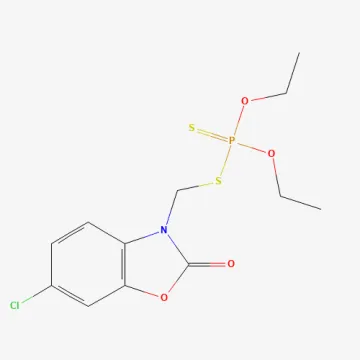
Phosalone
Description
Mode of action
Phosalone belongs to the organophosphate class and functions as a contact and stomach insecticide and acaricide with a broad spectrum of activity.
Its mode of action is based on the inhibition of the cholinesterase enzyme in the insect's nervous system, disrupting the transmission of nerve impulses.
As a result of nervous system paralysis, the pest loses its ability to feed and move, leading to its death within hours of contact with the substance.
The compound is characterized by high effectiveness even at lower temperatures, which distinguishes it from many other organophosphate insecticides.
It possesses moderate systemic activity, penetrating plant tissues, which provides protection for new shoots that emerge after the application.
What it targets
Phosalone is widely used in agriculture to control a broad range of chewing and sucking insects.
The primary targets include species from the orders Lepidoptera, Coleoptera, and Hemiptera, as well as various types of spider mites.
It is particularly effective against aphids, leafrollers, codling moths, weevils, scale insects, bugs, and sawfly larvae.
The product is frequently utilized in horticulture to protect fruit trees (apples, pears) and vineyards from a complex of pests.
It is also applied in field crops to manage pests in cereals, legumes, and industrial crops such as sugar beets.
Rates and timing
Application rates for Phosalone vary depending on the crop, infestation level, and pest type, typically ranging from 1.5 to 3.0 liters of the product per hectare.
Spraying is carried out during the growing season upon the first signs of pest infestation, ensuring complete and uniform coverage of the foliage.
The number of treatments per season is limited by environmental regulations and resistance management rules, usually capped at two applications.
The spray solution must be used on the day of preparation, as the stability of the emulsion may decrease during prolonged storage.
Weather conditions should be considered during application: it is best to spray during the early morning or evening to avoid strong wind and high heat.
Restrictions
Phosalone is a toxic substance, therefore strict adherence to personal protective equipment protocols, including respirators and gloves, is mandatory.
The use of the product is strictly prohibited in the buffer zones of water bodies used for fisheries due to its high toxicity to aquatic fauna.
The compound is hazardous to bees; therefore, treatments should be scheduled several days before flowering or during periods of minimal insect activity.
A mandatory pre-harvest interval (PHI) is required, typically ranging from 20 to 40 days depending on the specific crop being treated.
It is highly recommended to rotate Phosalone with pesticides from other chemical classes to prevent the development of pest resistance.
Status in the European Union
Not approved in the EU
- CAS number
- 2310-17-0
- Category (EU)
- IN - Insecticide
EU status is for reference only and does not replace national registration in your country.