
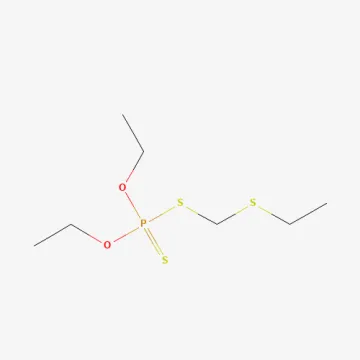
Phorate
Description
Mode of action
Phorate belongs to the chemical class of organophosphates. In terms of its physiological effect on pests, it acts as a potent inhibitor of the enzyme cholinesterase.
The inhibition of this enzyme leads to the disruption of nerve impulse transmission in the insect's body. This results in paralysis of the nervous system, followed by the rapid death of the pest.
The substance possesses systemic action: when applied to the soil, it is absorbed by the plant's root system and translocated throughout the vascular system of the plant.
Due to its systemic nature, the active ingredient is evenly distributed within the plant tissues, providing long-term protection for both roots and above-ground organs.
Phorate is characterized by significant contact and stomach activity, allowing it to effectively target a wide range of organisms that feed on the treated plants.
What it targets
This substance is primarily used to protect grain, vegetable, and industrial crops from a complex of hidden-living soil pests.
The spectrum of controlled targets includes wireworms, false wireworms, and larvae of scarab beetles inhabiting the soil.
Phorate is also effective against sucking pests such as aphids, leafhoppers, thrips, and various types of leaf miners that feed on the sap of growing plants.
Phorate-based products are applied to protect potatoes, sugar beets, corn, cotton, and various cereal grain crops.
The high activity of the substance allows for the control of pests that may have developed resistance to insecticides from other chemical groups, including pyrethroids.
Rates and timing
Phorate application rates vary depending on the crop type, pest density, and the mechanical composition of the soil into which the insecticide is applied.
The product is typically applied in granular form directly into furrows during seeding or planting using specialized application equipment.
It is crucial to ensure an even distribution of granules within the row to establish a protective barrier around the root system during the germination and early growth stages.
Application timing is strictly tied to the sowing moment, as the use of the product during other growth stages is limited due to its high toxicity and mode of action.
To prevent the loss of the active ingredient, the granules must be immediately incorporated into the soil at a depth corresponding to the seed or root zone.
Restrictions
Phorate is classified as a highly toxic substance (Class I or II depending on concentration), which imposes strict regulations on its usage.
Handling the product requires the mandatory use of full personal protective equipment by the operator and strict adherence to sanitary safety protocols.
The use of this insecticide is prohibited in home gardening and near water protection zones due to the risk of groundwater contamination and high toxicity to aquatic life.
Long pre-harvest intervals (PHI) must be strictly observed to prevent the accumulation of chemical residues in the final agricultural produce.
In many countries, the use of Phorate is restricted or completely banned due to its severe ecological impact on bees, wild birds, and mammals.
Status in the European Union
Not approved in the EU
- CAS number
- 298-02-2
- Category (EU)
- IN - Insecticide
- ADI
- 0.0007 mg/kg bw/day
- ARfD
- 0.003 mg/kg bw
EU status is for reference only and does not replace national registration in your country.