
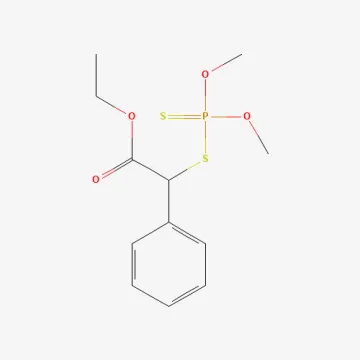
Phenthoate
Description
Mode of action
Phenthoate is a member of the organophosphate chemical class. It functions as an insecticide and acaricide with both contact and stomach action against a wide range of pests.
The primary mode of action involves the irreversible inhibition of the acetylcholinesterase enzyme within the insect nervous system. This disruption prevents proper nerve impulse transmission, leading to paralysis and death.
The substance possesses significant translaminar properties, allowing it to penetrate plant tissues. This makes it effective against pests that hide on the undersides of leaves or within plant structures.
Phenthoate is known for its rapid knockdown effect, which is highly beneficial when dealing with severe pest infestations that require immediate intervention to protect plant integrity.
Its efficacy is maintained over a reasonable period after application, providing a residual effect that helps control subsequent generations of pests during the active growth phase.
What it targets
Phenthoate is effective against a variety of chewing and sucking insects. It is commonly used to control Lepidoptera, Coleoptera, as well as various species of mites and scale insects.
It provides excellent control over aphids, leafhoppers, mealybugs, and various moth caterpillars that cause significant damage to foliage and fruit quality.
The product is utilized on various fruit crops, vegetables, and field crops to minimize yield losses caused by leaf-feeding insects and other agricultural pests.
It is particularly effective in controlling pest populations in rice cultivation, showing stable results even under high humidity and high-temperature environments.
Due to its broad-spectrum nature, it is also used in greenhouse operations to manage outbreaks of pests that have high reproductive rates and potential for rapid spread.
Rates and timing
Application rates for phenthoate are determined based on the specific crop and the level of pest pressure. Always refer to the product label for precise dosage requirements.
Applications should be made as soon as pest presence is detected or when economic threshold levels are reached. Uniform coverage is essential for the best performance.
To avoid the development of pesticide resistance, the number of applications per growing season should be limited according to local regulatory guidelines.
It is recommended to apply the product during early morning or late evening hours to maximize efficacy and ensure the spray does not evaporate too quickly in the heat.
Adherence to pre-harvest intervals (PHI) is mandatory to ensure that pesticide residues on the harvested produce fall within the legal limits defined for each crop.
Restrictions
Phenthoate is a toxic substance; therefore, operators must wear appropriate personal protective equipment, including respirators, protective gloves, and safety clothing.
The compound is highly hazardous to bees and other pollinators. Treatments must not be conducted during bloom or when bees are actively foraging in the area.
Mixing phenthoate with highly alkaline substances should be avoided, as this chemical incompatibility can lead to rapid degradation of the active ingredient.
Store in a cool, dry, well-ventilated area away from direct sunlight. Ensure containers are tightly sealed and properly labeled to prevent accidental exposure.
Dispose of pesticide containers and unused chemical residues according to local environmental regulations to prevent contamination of soil, surface water, and groundwater.
Status in the European Union
Not approved in the EU
- CAS number
- 2597-03-7
- Category (EU)
- IN - Insecticide
- ADI
- 0.003 mg/kg bw/day
EU status is for reference only and does not replace national registration in your country.