
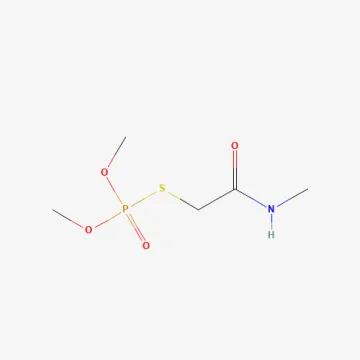
Omethoate
Description
Mode of action
Omethoate belongs to the organophosphate chemical class and functions as a systemic insecticide and acaricide. It acts as an oxygen analog of dimethoate, which grants it high biological activity and rapid absorption into plant tissues.
The mode of action involves the inhibition of the enzyme acetylcholinesterase in the insect's nervous system. By blocking this enzyme, the substance causes an accumulation of acetylcholine, leading to overstimulation of nerves, paralysis, and death.
As a systemic agent, it is absorbed by the roots or leaves and translocated throughout the plant, providing effective protection for new growth against sap-sucking pests.
The compound remains stable on the leaf surface for a considerable time, which contributes to its efficacy against various hidden feeders that are difficult to reach with contact-only products.
Due to its potent systemic nature, it is highly effective against insects that have developed resistance to simpler contact insecticides.
What it targets
Omethoate is widely used to manage a broad spectrum of pests that attack various agricultural and horticultural crops.
Key target pests include aphids, spider mites, thrips, leafhoppers, scales, and various types of mining flies that damage leaf tissues.
It is particularly effective against pests that live within the plant tissue or protected areas like curled leaves where surface contact is limited.
Suitable for use on a wide variety of crops, including cereals, vegetables, cotton, and fruit trees, where systemic action is required to ensure long-lasting control.
- Aphid species (Aphididae)
- Spider mites (Tetranychidae)
- Thrips (Thysanoptera)
- Leafhoppers and scale insects
Rates and timing
Application rates are determined based on the crop type, pest infestation level, and specific regulatory guidelines for each geographic region.
Applications should be timed to coincide with the early stages of pest population development to maximize efficacy and minimize the need for repeat treatments.
Strict intervals between the final application and harvest (pre-harvest interval) must be observed to ensure that residues remain within safe limits for human consumption.
The use of appropriate spray equipment is crucial for achieving uniform coverage, which enhances the systemic uptake of the active ingredient into the plant's vascular system.
Mixing with other pesticides requires careful verification to ensure compatibility and avoid phytotoxicity or degradation of the active components.
Restrictions
Omethoate is highly toxic to humans and other mammals; therefore, strict adherence to personal protective equipment (PPE) requirements is mandatory during handling and application.
The application of this substance is strictly prohibited during the blooming stage of crops to protect honeybees and other vital pollinators from exposure.
Water contamination must be prevented at all costs, as the chemical is toxic to aquatic life, including fish and various invertebrates found in freshwater ecosystems.
Storage facilities must be well-ventilated, secured from unauthorized access, and maintained under conditions that prevent the degradation of the chemical.
Personnel entering treated areas must respect re-entry intervals to avoid accidental inhalation or skin contact with residual amounts of the pesticide.
Status in the European Union
Not approved in the EU
- CAS number
- 1113-02-6
- Category (EU)
- IN - Insecticide
EU status is for reference only and does not replace national registration in your country.