
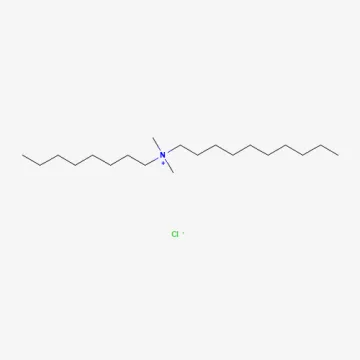
Octyldecyldimethyl ammonium chloride
Description
Mode of action
Octyldecyldimethylammonium chloride is a member of the quaternary ammonium compounds (QACs) group, which function as cationic surfactants. These compounds are widely utilized due to their potent antimicrobial efficacy against a broad range of pathogens.
The mechanism of action involves the adsorption of the positively charged molecule onto the negatively charged cell membrane of the microorganism. This interaction disrupts the lipid bilayer structure, leading to membrane disintegration.
Once the cell membrane is compromised, vital cellular components leak out, causing irreversible damage to the metabolism and eventual death of the organism. This process is effective against bacteria, viruses, and many fungal spores.
QACs are known for their ability to provide residual protection. After application, a persistent antimicrobial film remains on the surface, which continues to inhibit microbial growth for a period following the disinfection procedure.
The efficacy of these compounds is influenced by the organic load and pH levels, but they remain highly effective in agricultural disinfection protocols when used at correct concentrations. They are strictly non-systemic and act only through contact.
What it targets
In agriculture, these compounds are primarily used for sanitizing greenhouses, nurseries, and plant growth facilities. They are essential for preventing the spread of bacterial diseases that can wipe out greenhouse-grown crops.
They are effective at eliminating various fungal spores, including those responsible for powdery mildew, gray mold, and root rot. Regular disinfection of trays, pots, and agricultural tools helps maintain a healthy growing environment.
Octyldecyldimethylammonium chloride is frequently used to sanitize hydroponic systems and irrigation lines. By preventing biofilm development, it ensures that water distribution systems remain clean and functional throughout the season.
These agents are useful in controlling various gram-positive and gram-negative bacteria that thrive in moist greenhouse conditions. They act as a preventative measure to secure plant hygiene during the propagation phase.
Beyond crop facilities, they are applied to clean storage areas and post-harvest equipment. This practice reduces the risk of cross-contamination and prolongs the shelf life of produce by minimizing contact with spoilage-inducing organisms.
Rates and timing
Application rates are determined by the specific sanitization objective and the level of bio-burden. Manufacturers provide detailed guidelines on mixing ratios that must be strictly followed to ensure both efficacy and safety.
When disinfecting empty greenhouses, concentrated solutions are sprayed or applied via fogging machines to achieve complete coverage. It is critical to ensure that all interior surfaces are thoroughly wetted with the disinfectant solution.
For irrigation and hydroponic systems, precise dosing is necessary to prevent any chemical damage to components while maintaining microbial control. Systems should be flushed with clean water after the required contact time.
Scheduling is limited to the periods between crop cycles. This ensures that the harsh chemical action of the disinfectant is isolated from the living tissues of the plants, preventing potential phytotoxicity.
Strict adherence to contact time—the duration the disinfectant must stay on the surface to kill the target pathogens—is a mandatory requirement for successful sanitation protocols.
Restrictions
The most significant limitation is extreme phytotoxicity. Direct exposure to any part of a growing plant will lead to severe chemical burns, stunted growth, and death. Therefore, these products are strictly prohibited during the vegetative phase.
Personal Protective Equipment (PPE), including gloves, goggles, and respirators, is mandatory for all personnel involved in the application process. Direct skin contact and inhalation of sprays must be avoided at all costs.
Compatibility must be carefully considered; these compounds should not be mixed with anionic surfactants as they will be neutralized. Chemical interference can render the disinfectant useless and potentially cause unwanted precipitation.
Users must be aware of the corrosive potential of QACs on certain metal alloys. Equipment should be rinsed thoroughly to prevent long-term damage, and wastewater containing these substances must be disposed of according to environmental regulations.
Large-scale disposal into natural water bodies is strictly forbidden due to the compound's high toxicity to aquatic organisms. Proper waste management and containment procedures are essential to protect the surrounding ecosystem.
Status in the European Union
Not approved in the EU
- Category (EU)
- FU - Fungicide
EU status is for reference only and does not replace national registration in your country.