
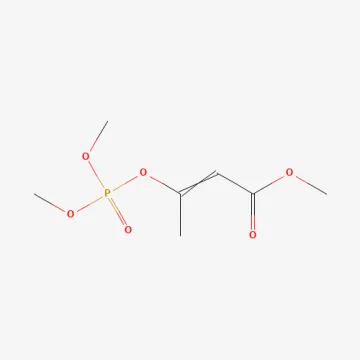
Mevinphos
Description
Mode of action
Mevinphos is a powerful organophosphate insecticide and acaricide known for its rapid systemic and contact action. It functions primarily as a potent cholinesterase inhibitor in the nervous systems of target pests.
Once inside the insect, the chemical prevents the breakdown of the neurotransmitter acetylcholine. This accumulation causes continuous nerve stimulation, leading to paralysis and death within a very short period of time.
The compound exhibits rapid penetration into plant tissues and is translocated through the vascular system. This systemic property ensures that insects feeding inside the plant are effectively reached by the active ingredient.
A distinctive feature of mevinphos is its relatively short residual persistence compared to other organophosphates. It breaks down quickly, which is a major advantage for managing pests shortly before harvesting.
Due to its high biological efficacy and rapid mode of action, it is categorized as a "shock" treatment for managing sudden outbreaks of various agricultural pests.
What it targets
Mevinphos is highly effective against a wide range of sucking and chewing insects. It is commonly used to control aphids, thrips, and various species of mites that infest field crops and greenhouse vegetables.
The chemical effectively eliminates caterpillars and other larvae of Lepidoptera, such as leafrollers and cutworms, which are known for causing severe damage to fruit trees and row crops.
It is also utilized to combat various bugs and leafhoppers that act as vectors for plant pathogens, thereby preventing the spread of diseases within the crop population.
The insecticide is frequently deployed in scenarios where high-density pest populations pose an immediate threat to crop yield and quality, requiring a swift and decisive response.
Its ability to act through contact and ingestion makes it a versatile tool for farmers tackling pests that are difficult to reach with standard surface-applied chemicals.
Rates and timing
Application rates depend on the severity of the infestation, the crop type, and the specific pest species. Typical dosages generally range between 0.2 and 0.8 kg of active ingredient per hectare.
Due to its rapid degradation, it allows for shorter pre-harvest intervals, enabling farmers to protect crops even during the later stages of growth or maturation.
Optimal application requires precise calibration of spray equipment to ensure thorough coverage of all plant parts, particularly the undersides of leaves where many pests reside.
Applications should ideally be timed for early morning or evening hours to minimize evaporation and drift caused by high daytime temperatures or wind conditions.
To sustain its efficacy, users are advised to rotate mevinphos with different classes of insecticides, preventing the development of resistance in pest populations frequently exposed to organophosphates.
Restrictions
Mevinphos is highly toxic to humans and mammals, requiring strict adherence to safety protocols. Proper personal protective equipment, including respirators and chemical-resistant clothing, is mandatory.
It is highly toxic to bees and beneficial insects. Applications must not occur during the blooming period to avoid causing severe damage to local pollinator populations.
Strict re-entry intervals must be observed after application. Workers must not enter treated areas until the safety period has expired to prevent accidental exposure.
The substance poses significant risks to aquatic life. Consequently, applications must be avoided near waterways, ponds, or drainage systems to prevent contamination.
Proper disposal of containers and leftover spray solution is critical. All waste must be handled according to strict hazardous material regulations to ensure environmental protection.
Status in the European Union
Not approved in the EU
- CAS number
- 7786-34-7
- Category (EU)
- IN - Insecticide
EU status is for reference only and does not replace national registration in your country.