
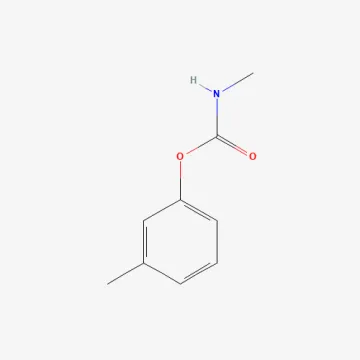
Metolcarb
Description
Mode of action
Metholcarb belongs to the carbamate chemical class and is a highly effective insecticide with contact and systemic action. The primary mechanism involves the irreversible inhibition of the acetylcholinesterase enzyme in the insect's nervous system.
The disruption of nerve impulse transmission leads to an excessive accumulation of acetylcholine in the synapses. This causes paralysis, convulsions, and rapid death of the insect upon contact with the substance or ingestion of treated plant parts.
The product demonstrates significant ovicidal and larvicidal activity, enabling control of pests at different stages of their ontogeny. Its systemic properties provide protection for new plant growth for a certain period after application.
The substance is characterized by a relatively fast initial "knockdown" effect, which is critical when pest populations are high. It remains effective even at moderately low temperatures, unlike some organophosphorus compounds.
Metholcarb is capable of penetrating plant tissues, creating a protective barrier that is resistant to being washed away by rainfall shortly after the spray solution has dried on the leaves.
What it targets
This active ingredient is actively used to combat a wide range of pests with chewing and sucking mouthparts. Primarily, these include various species of leafhoppers that damage grain crops and rice.
It is effective against mirid bugs, which cause significant damage to the quality of vegetable and field crop harvests. It also controls populations of aphids and certain species of thrips, preventing their reproduction.
The product is used to protect rice crops from rice leafhoppers, which are vectors for viral diseases. It significantly reduces the risk of epiphytotics by preventing the spread of infections carried by insect vectors.
In orchards and vegetable plantations, Metholcarb yields good results in suppressing active development phases of psyllids. This makes it a valuable tool in insecticide rotation programs to prevent the development of resistance.
- Rice leafhopper
- Mirid bugs
- Aphids
- Thrips
- Psyllids
Rates and timing
Application rates vary depending on the specific crop, growth stage, and infestation level. Typically, for field crops, working concentrations range from 0.5 to 1.5 kg of active ingredient per hectare.
Spraying should be carried out when the pest population reaches the economic threshold. To achieve maximum effect, it is essential to ensure uniform coverage of the leaf surface with the spray solution.
Pre-harvest intervals must be strictly followed according to the product's application regulations to eliminate residues in marketable produce. This period usually ranges from 20 to 30 days.
If repeated applications are necessary, the interval between them should be at least 10–14 days. It is recommended to rotate Metholcarb with insecticides from other chemical groups to manage resistance.
Applications should be performed in the morning or evening hours in the absence of strong wind and temperatures above 25 degrees Celsius to prevent rapid evaporation and degradation of the active substance.
Restrictions
Metholcarb is a moderately toxic compound to warm-blooded animals, so personal protective equipment for the skin, eyes, and respiratory tract must be used when handling it.
The product is highly toxic to bees and other beneficial pollinating insects. Applications are prohibited during the period of mass flowering of crops and during active bee foraging within the vicinity of apiaries.
It is not recommended to use the substance in close proximity to aquaculture ponds due to its potential toxicity to aquatic organisms. Adherence to buffer zones around drinking water sources is required.
When mixing with other pesticides, a compatibility test in the tank mix is mandatory. Mixing Metholcarb with highly alkaline products is not recommended, as this can lead to the chemical neutralization of the active ingredient.
Storage must be carried out in specialized warehouse facilities with controlled temperature regimes, avoiding moisture exposure and direct sunlight on the pesticide packaging.
Status in the European Union
Not approved in the EU
- CAS number
- 1129-41-5
- Category (EU)
- IN - Insecticide
EU status is for reference only and does not replace national registration in your country.