
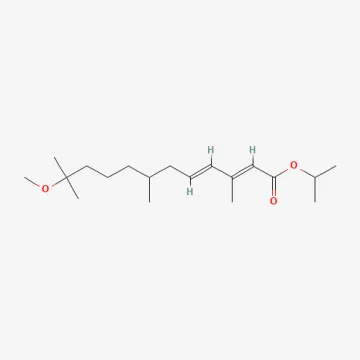
Methoprene
Description
Mode of action
Methoprene is a synthetic analog of the insect juvenile hormone (JH). It acts by mimicking this natural hormone, which is crucial for regulating the development and metamorphosis of insects.
The compound interferes with the normal growth cycle of insects, specifically by preventing them from reaching the adult stage or by causing them to undergo abnormal development.
When exposed to methoprene, larvae are unable to complete their transformation into healthy adults, often resulting in death during the pupal stage or the emergence of non-reproductive individuals.
Because its mode of action is specific to insect endocrine processes, methoprene is generally considered to have a high margin of safety for mammals and birds.
The substance does not kill adult insects immediately, but rather breaks the reproductive cycle, leading to a steady decline in the population density over time.
What it targets
Methoprene is widely utilized for the control of stored product pests, such as grain beetles, weevils, and moths, which infest cereal grains and processed food commodities.
In the livestock industry, it is effectively used to manage fly populations in manure by preventing the development of larvae within bedding and waste materials.
The compound is also utilized for mosquito control programs, being applied to aquatic habitats to disrupt the development of larval stages into adult mosquitoes.
It is occasionally used in greenhouse environments as part of an Integrated Pest Management (IPM) strategy to control specific populations of flies and caterpillars.
Due to its selective nature, it is often favored in sensitive areas where traditional broad-spectrum insecticides might pose risks to non-target organisms or the environment.
Rates and timing
Application rates for methoprene vary significantly based on the target pest and the treated environment, requiring strict adherence to label guidelines.
When used on stored grain, the product is typically applied as a direct treatment or surface spray, ensuring even distribution to provide long-term protection.
In animal health, it can be administered as a feed additive, where it passes through the animal's system to effectively treat the manure produced.
Timing is critical, as the treatment must be present when the larvae are actively developing; therefore, monitoring pest activity is highly recommended.
The duration of effectiveness depends on environmental factors, such as temperature and exposure to light, which can affect the stability of the active ingredient.
Restrictions
Methoprene is known to be photolabile, meaning it degrades relatively quickly when exposed to direct sunlight, which limits its effectiveness in outdoor applications.
Because it lacks a rapid 'knockdown' effect, it is often ineffective as a standalone treatment when high populations of adult insects are present and immediate reduction is needed.
While the product is generally safe, standard personal protective equipment (PPE) should be worn during handling to prevent skin irritation or inhalation of concentrated vapours.
Users should ensure that treatment intervals comply with local regulations to prevent any potential residues in harvested commodities or animal products.
Storage should be conducted in a cool, dry place, keeping the containers sealed and away from direct sunlight to preserve the integrity of the chemical structure.
Status in the European Union
Not approved in the EU
- CAS number
- 40596-69-8
- Category (EU)
- IN - Insecticide
EU status is for reference only and does not replace national registration in your country.