
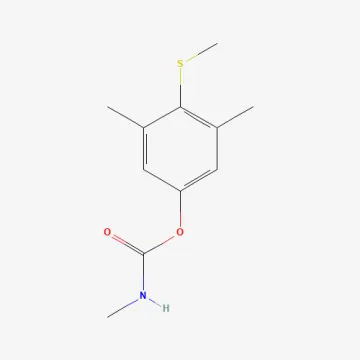
Methiocarb
Description
Mode of action
Methiocarb is a broad-spectrum pesticide belonging to the carbamate chemical class, known for its high efficiency in protecting crops from diverse pests.
The primary mechanism of action involves the irreversible inhibition of the acetylcholinesterase enzyme, which is essential for proper neural signal transmission in pests.
By disrupting the nervous system, the substance induces rapid paralysis in target organisms, which leads to their inevitable death shortly after exposure.
It exhibits both contact and ingestion activity, meaning it affects pests that consume treated plant parts as well as those that come into physical contact with the chemical residues.
Due to its systemic properties, methiocarb can be absorbed into plant tissues, providing prolonged protection against pests that feed on different parts of the crop.
What it targets
The primary use of methiocarb is for the control of soil-dwelling pests and terrestrial mollusks, specifically slugs and snails that can devastate vegetable crops.
It is highly effective against various coleopteran pests, including wireworms and beetles, which are known to cause significant damage to agricultural productivity.
Methiocarb is also utilized to combat aphids, thrips, and certain mite species, making it a versatile tool for integrated pest management programs.
It provides an essential defense for seeds and emerging seedlings against pests that pose a threat during the initial stages of crop development.
Its dual role as a molluscicide and an insecticide makes it particularly valuable for protecting high-value crops susceptible to slug and insect damage.
Rates and timing
Application rates for methiocarb vary based on the specific formulation; granulated baits are typically applied at rates ranging from 5 to 10 kg per hectare.
When used for seed treatment, dosage is determined based on the total weight of the seeds, usually requiring specific volumes per ton of planting material.
Optimal timing for application corresponds with the peak activity periods of the target pests, often favoring evening hours for slug control.
Adherence to the maximum number of applications per season is crucial to ensure efficacy and comply with legal requirements for chemical use in agriculture.
Proper distribution on the soil surface or within the seed furrow is necessary to ensure that pests effectively encounter the treatment.
Restrictions
Methiocarb is highly toxic to mammals, birds, and beneficial insects like bees, requiring strict environmental precautions during application.
Application during the flowering stage of crops or near blooming weeds is strictly prohibited to prevent the mortality of pollinating insects.
Operators must wear personal protective equipment, including respirators and chemical-resistant clothing, to minimize exposure risks during handling.
Strict adherence to pre-harvest intervals is mandatory to prevent harmful residue levels in the final harvested produce meant for human consumption.
The use of methiocarb in areas adjacent to water bodies must be restricted due to its potential toxicity to aquatic life and fish populations.
Status in the European Union
Not approved in the EU
- CAS number
- 2032-65-7
- Category (EU)
- IN - Insecticide
- Approved from
- 01.10.2007
- Approval until
- 03.10.2019
- ADI
- 0.00025 mg/kg bw/day
- ARfD
- 0.0005 mg/kg bw
- AOEL
- 0.00025 mg/kg bw/day
EU status is for reference only and does not replace national registration in your country.