
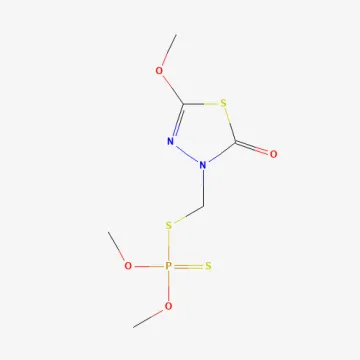
Methidathion
Description
Mode of action
Methidathion is a non-systemic organophosphate insecticide and acaricide that acts primarily by inhibiting the enzyme acetylcholinesterase in the nervous system of insects.
By preventing the normal breakdown of acetylcholine at the nerve synapses, the substance causes continuous nerve stimulation, resulting in paralysis and death.
The compound demonstrates effective contact and stomach poison properties, ensuring control of both mobile insects and those feeding on treated plant surfaces.
It possesses limited translaminar activity, which allows it to penetrate the leaf tissue and control pests located on the underside of leaves or within plant structures.
The chemical is known for its fast knockdown effect, providing rapid reduction of pest populations during outbreaks in various agricultural crops.
What it targets
Methidathion is employed to control a wide range of pests with chewing and sucking mouthparts, primarily targeting scale insects, aphids, and mites.
It is effective against various species of lepidoptera, coleoptera, and homoptera that cause significant economic damage in orchard and plantation crops.
Key targets include San Jose scale, mealybugs, leafrollers, weevils, and spider mites that affect fruits, nuts, and citrus production.
It is widely utilized in integrated pest management programs for deciduous fruit trees and grapes to manage overwintering populations of harmful insects.
The broad-spectrum nature of the substance makes it a useful tool for managing multiple pest species simultaneously in complex growing environments.
Rates and timing
The dosage rates for methidathion depend heavily on the target pest, the growth stage of the crop, and the geographical location of the application.
Applications are typically scheduled based on threshold monitoring of pest density rather than prophylactic measures to maximize efficacy and safety.
Correct dilution in water is crucial, as the active ingredient is sensitive to pH levels; neutral or slightly acidic water is preferred to maintain stability.
Frequency of use is limited to prevent the rapid development of resistance within target pest populations, a common issue with organophosphate chemicals.
Applications must be conducted using precise equipment to ensure thorough coverage, which is essential given the compound's contact-based activity mode.
Restrictions
Methidathion is highly toxic to birds, aquatic life, and beneficial pollinators such as bees; therefore, application during bloom is strictly prohibited.
Strict pre-harvest intervals must be adhered to, ensuring that residue levels in the final harvested crop fall below established regulatory maximums.
Operators must wear appropriate personal protective equipment (PPE), including chemical-resistant suits and respirators, to prevent systemic exposure.
Avoid applying in unfavorable weather conditions, such as high temperatures or strong winds, to prevent off-target drift and volatilization of the active ingredient.
Compatibility with other agrochemicals should be checked carefully, as mixing with alkaline substances can cause rapid degradation of the methidathion molecule.
Status in the European Union
Not approved in the EU
- CAS number
- 950-37-8
- Category (EU)
- IN - Insecticide
- ADI
- 0.001 mg/kg bw/day
- ARfD
- 0.01 mg/kg bw
EU status is for reference only and does not replace national registration in your country.