
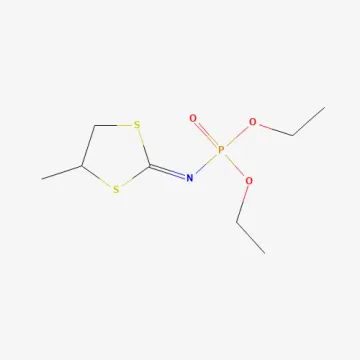
Mephosfolan
Description
Mode of action
Mephosfolan belongs to the organophosphate chemical class, which is widely recognized for its potent insecticidal properties in agricultural crop protection.
The core mechanism of action involves the inhibition of the enzyme acetylcholinesterase, leading to a disruption of the nervous system and eventual paralysis of the target insects.
As a systemic agent, it is absorbed by the plant tissues and translocated throughout the vascular system, providing comprehensive protection to new growth.
The compound exhibits both contact and ingestion activity, ensuring that pests are controlled regardless of whether they touch the foliage or feed on it.
Its persistence allows for a long-lasting residual effect, which reduces the need for frequent applications throughout the growing season.
What it targets
Mephosfolan is primarily targeted at controlling various sap-sucking and leaf-chewing insects that threaten agricultural productivity.
It is highly effective against pests that act as vectors for viral plant diseases, which is a key advantage for managing sensitive horticultural and field crops.
- Aphids
- Leafhoppers
- Thrips
- Spider mites
- Various lepidopteran larvae
By effectively managing these populations, the insecticide helps in maintaining crop vigor and preventing yield loss during critical growth stages.
The application is recommended based on field scouting to ensure that treatments are timed precisely with the peak infestation periods of the pests.
Restrictions
Due to its high toxicity, Mephosfolan must be handled with extreme care, and users should always wear full personal protective equipment to avoid exposure.
Environmental safety protocols must be followed strictly, especially regarding the protection of pollinators, such as honeybees, and aquatic life in nearby streams.
Users must adhere to the pre-harvest interval (PHI) specified on the product label to ensure that residue levels in harvested crops remain within safety limits.
To prevent the development of insect resistance, it is advisable to rotate Mephosfolan with insecticides belonging to different chemical families.
Storage of the product should be in secure, temperature-controlled facilities away from food, feed, and water supplies to prevent contamination risks.
Status in the European Union
Not approved in the EU
- CAS number
- 950-10-7
- Category (EU)
- IN - Insecticide
EU status is for reference only and does not replace national registration in your country.