
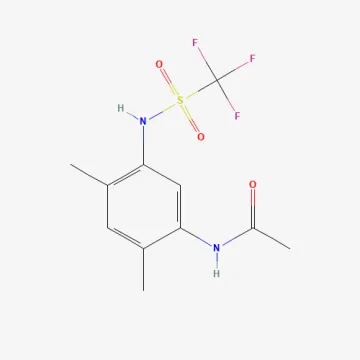
Mefluidide
Description
Mode of action
Mefluidide belongs to the fluorinated sulfonamide class of chemistry and functions as a systemic plant growth regulator (PGR) in modern agricultural practices.
Upon absorption by the plant tissues, the compound is translocated throughout the vascular system, significantly influencing cellular division and elongation processes.
The primary mode of action involves the suppression of growth-promoting hormones, which effectively induces a temporary inhibition of vertical shoot elongation.
Rather than causing tissue necrosis, mefluidide redirects the plant's energy resources toward the development of root systems and overall structural robustness.
The substance also modulates metabolic pathways related to protein synthesis, which can enhance the plant's resistance to environmental stressors like drought or temperature fluctuations.
What it targets
Mefluidide is primarily utilized in turfgrass management for golf courses, park maintenance, and highway embankments to reduce the frequency of mowing.
It is effective in suppressing seedhead formation in various grass species, maintaining a clean and aesthetically pleasing appearance in managed landscapes.
In crop production, it is used to prevent lodging in certain cereal grains, which helps to maintain structural integrity and improve harvest efficiency.
The chemical is also applied to ornamental plantings to control excessive growth and encourage more compact, dense vegetation patterns.
Its use extends to controlling the growth of invasive grasses, limiting their competitive ability without completely eradicating them from the target area.
Rates and timing
The application rate typically ranges from 0.5 to 2.0 kg of active ingredient per hectare, depending on the plant species and the desired growth retardation level.
Optimal timing for application is during the peak vegetative growth phase, specifically before the plants reach the flowering stage or seedhead development.
Application should be performed using calibrated spray equipment to ensure uniform coverage across the entire target area for consistent results.
Environmental conditions play a crucial role; efficacy is maximized under moderate temperatures when the plants are actively metabolizing.
Sequential applications may be required depending on the recovery speed of the turf, with recommended intervals of 4 to 6 weeks between treatments.
Restrictions
Personnel handling mefluidide must wear appropriate personal protective equipment (PPE), including gloves, goggles, and protective clothing, to avoid any dermal or respiratory exposure.
Applications should be avoided during high wind conditions to prevent spray drift onto non-target areas, including adjacent sensitive crops or gardens.
Do not apply the product to plants suffering from significant stress, such as disease, pest infestations, or nutrient deficiencies, as this may compromise recovery.
The product must be stored in its original container in a secure, cool, and dry environment, away from food, feed, and access by unauthorized persons.
Empty containers and leftover solutions must be disposed of strictly in accordance with local environmental regulations to protect soil and water quality.
Status in the European Union
Not approved in the EU
- CAS number
- 53780-34-0
- Category (EU)
- PG - Plant growth regulator
EU status is for reference only and does not replace national registration in your country.