
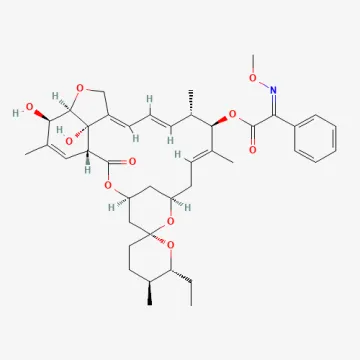
Lepimectin
Description
Mode of action
Lepimectin belongs to a class of biological insecticides derived from the metabolites of soil microorganisms. Chemically, these compounds are classified as macrocyclic lactones, which exhibit high specific activity against various insect species, particularly those causing significant crop damage.
The mechanism of action involves the stimulation of gamma-aminobutyric acid release in the presynaptic neurons of the pest. This action triggers the activation of chloride channels in nerve cells, resulting in irreversible paralysis of the insect and its eventual death.
These preparations demonstrate translaminar effects, allowing the active ingredient to penetrate plant tissues and provide protection for both sides of the leaf. Pest feeding typically ceases shortly after contact with the treated surface or ingestion of plant parts.
Unlike many synthetic pyrethroids, lepimectin-based products are relatively selective, targeting primarily the larval stages of insects. The speed of the insecticidal effect can be influenced by prevailing weather conditions and the physiological health of the insect population.
The stability of the active ingredient on plant surfaces is limited by UV radiation exposure. Therefore, for maximum efficiency, it is recommended to apply the product during early morning or late evening hours to avoid degradation caused by direct sunlight.
What it targets
The primary use of lepimectin is the control of lepidopteran pests, including various species of cutworms, moths, leafrollers, and codling moths. It is effective for protecting a wide range of vegetable, fruit, and industrial crops from larval damage.
This group of insecticides is a valuable tool for managing pest populations that have developed resistance to traditional organophosphate or pyrethroid chemicals, making it essential for sustainable pest management strategies.
The highest susceptibility is observed in young larval stages (L1-L2), making field monitoring and precise timing crucial. As the larvae mature, their sensitivity to the compound may decrease, which is an important consideration for integrated pest management.
The crop range includes potatoes, tomatoes, cabbage, apple orchards, vineyards, and cereals. Lepimectin helps maintain pest densities below the economic threshold, reducing the need for repeated high-dosage applications.
Beyond its direct insecticidal action, usage of lepimectin prevents secondary damage. By curbing larval feeding, it reduces the entry points for opportunistic fungal pathogens, thereby contributing to overall crop health.
Rates and timing
Dosage rates for lepimectin vary depending on the specific formulation, the target pest species, and the level of crop infestation. Always refer to the manufacturer's label to prepare the optimal concentration for thorough leaf coverage without runoff.
The timing of applications should be dictated by regular field scouting and pheromone trap data. Targeting the period of mass egg-hatching ensures the highest biological efficacy and long-term protection of the crop.
The residual protection period usually lasts approximately two weeks. Subsequent applications should be scheduled at intervals of at least 7-14 days, accounting for the developmental cycles of successive pest generations.
When preparing tank mixtures, water pH and the inclusion of adjuvants are critical. Proper wetting agents significantly improve adherence to plant surfaces, particularly for crops with waxy cuticles, ensuring the active ingredient remains effective.
To avoid resistance development, it is strictly recommended not to perform more than two consecutive applications of this chemical group. Rotating with other insecticide modes of action is a standard practice for maintaining long-term efficacy.
Restrictions
Strict adherence to safety protocols is mandatory when handling lepimectin. Operators must use appropriate personal protective equipment, including gloves, respirators, and protective clothing, to minimize inhalation and dermal exposure risks.
Respecting the pre-harvest interval (PHI) is essential to ensure that residues in the final produce remain within established safety limits. Each crop has specific time requirements that must be followed before harvesting.
The product poses a risk to honeybees and other beneficial pollinators upon direct contact. Applications should be performed during periods when bees are not actively foraging, and drift towards nearby flowering weeds must be minimized.
Store the product in its original, sealed container in a cool, dry, and secure location away from direct sunlight. Ensure that the storage area is inaccessible to children, unauthorized persons, and domestic animals.
In case of accidental skin or eye contact, flush the affected area immediately with plenty of water. If symptoms of irritation or intoxication occur, seek medical attention immediately and provide the product label for reference.
Status in the European Union
Not approved in the EU
- CAS number
- 863549-51-3
- Category (EU)
- IN - Insecticide
EU status is for reference only and does not replace national registration in your country.