
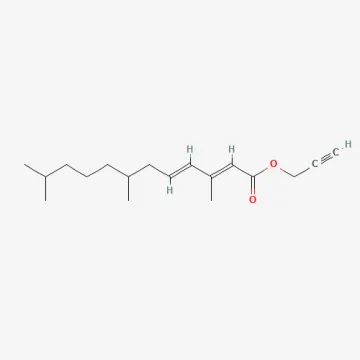
Kinoprene
Description
Mode of action
Kinoprene belongs to the class of juvenile hormone analogs (JHA). This substance does not kill insects instantly but mimics the action of a natural hormone that maintains the larval stage of the pest's development.
The product affects biochemical processes in the pest's organism, interrupting the normal metamorphosis cycle. Larvae exposed to the substance lose the ability to pupate properly or transition to the next developmental stage.
As a result of hormonal imbalance, insects either die during the molting phase or develop into non-viable individuals that cannot reproduce. This property makes kinoprene an effective tool for suppressing pest populations in protected environments.
An important aspect is the selectivity of the action. Since the hormonal system of insects differs from that of warm-blooded animals, kinoprene has relatively low toxicity to humans and beneficial entomofauna when safety rules are observed.
The substance is characterized by high stability in field conditions, allowing it to provide a long-lasting protection period for crops against re-infestation by harmful insects.
What it targets
The primary purpose of this group of substances is to control a wide range of sucking pests. This primarily applies to members of the order Hemiptera.
Products based on kinoprene are particularly effective against various species of aphids, whiteflies, and certain scale insects. They are used where it is necessary to prevent rapid pest population growth.
The substance is most effective in protected ground, such as greenhouses and orangeries, where it is important to control pests on floral and vegetable crops without the use of aggressive neurotoxins.
The use of agents from this group significantly reduces damage to young shoots and leaves, preserving the marketability of the produce and preventing the transmission of viral diseases by insect vectors.
- Aphids (Aphididae)
- Whiteflies (Aleyrodidae)
- Scale insects (Coccoidea)
- Mealybugs
Rates and timing
Kinoprene application rates depend on the specific formulation and the type of crop being grown. Typically, the agents are used as working solutions via foliar spraying.
Treatments are recommended to begin as soon as the first signs of pests are detected, as the product is most effective during the early larval stages of development.
Intervals between treatments are set based on the pest's biological life cycle and the temperature in the greenhouse. On average, the protective effect of the product can last from 10 to 21 days.
It is necessary to strictly follow the preparation instructions for the working solution, ensuring uniform coverage of all plant surfaces, including the undersides of the leaves.
When used in tank mixes, compatibility with other pesticides should be pre-tested to avoid reducing biological efficiency or causing phytotoxicity.
Restrictions
A primary limitation when working with kinoprene is the necessity of strictly maintaining temperature conditions in the room. Excessively high temperatures may accelerate the degradation of the active substance.
The product requires the use of personal protective equipment for the operator, including respirators, gloves, and protective clothing. Despite moderate toxicity, direct contact with skin or mucous membranes must be avoided.
Applying treatments during the peak flight period of bees is prohibited if the product is used in open ground, although greenhouse farming remains the primary area of application.
Exceeding the frequency of treatments specified in the instructions is not recommended to prevent the accumulation of residual amounts in the produce and to reduce the ecological impact.
Storage should be in a dry, cool place, inaccessible to children and animals, away from sources of fire and food products.
Status in the European Union
Not approved in the EU
- CAS number
- 42588-37-4
- Category (EU)
- IN - Insecticide
EU status is for reference only and does not replace national registration in your country.