
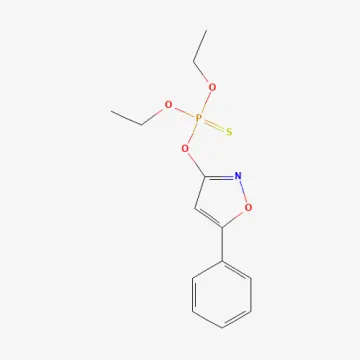
Isoxathion
Description
Mode of action
Isoxathion belongs to the organophosphate chemical class. It acts as an acetylcholinesterase inhibitor, interfering with the nervous system function of target insects by preventing the breakdown of neurotransmitters.
Once the enzyme is blocked, the excessive accumulation of acetylcholine leads to continuous stimulation of the nervous system, resulting in paralysis and death of the insect. This mechanism provides rapid knockdown effects.
The substance exhibits both contact and ingestion activity. Insects are affected when they come into contact with treated surfaces or consume tissues from treated plants, allowing for flexible application methods.
Isoxathion demonstrates systemic activity when applied to the soil. It is absorbed by plant roots and translocated through the vascular system, providing protection against hidden pests that live within the root zone.
Its persistence in the soil makes it a valuable tool for managing insects that are difficult to reach with surface sprays, providing a long-lasting barrier against soil-borne infestations.
What it targets
This active ingredient targets a wide range of harmful organisms, primarily soil-dwelling pests such as wireworms and various fly larvae that damage the underground parts of plants.
It is also effective against a variety of foliar pests, including aphids, thrips, and several species of Lepidoptera larvae (caterpillars) that feed on leaves and stems, causing significant economic damage.
Isoxathion is frequently used in vegetable production and ornamental plant care to manage pest populations in both open field and greenhouse environments, ensuring crop health and quality.
It plays a key role in integrated pest management programs where control of soil pests is critical for crop establishment and early growth stages.
- Soil-dwelling larvae and beetles
- Aphids and plant-sucking insects
- Lepidopteran larvae (caterpillars)
- Thrips
Rates and timing
Application rates for isoxathion depend on the target pest and the method of application. Soil drenching or incorporation requires specific concentrations to ensure the active ingredient reaches the root zone effectively.
Foliar sprays should be applied at the onset of pest activity. Consistent coverage is essential to maximize the contact activity of the insecticide on the insect body.
Pre-harvest intervals (PHI) must be strictly followed according to local agricultural regulations to ensure food safety and minimize chemical residues in the final harvested produce.
In greenhouse settings, application rates should account for the volume of the space and the growth stage of the plants, avoiding excessive moisture that could lead to chemical runoff.
To avoid the development of pest resistance, it is advised to rotate isoxathion with other insecticides possessing different modes of action throughout the growing season.
Restrictions
Isoxathion is highly toxic to humans and non-target animals. Proper personal protective equipment (PPE), including chemical-resistant gloves, boots, and respirators, is mandatory during handling and application.
It is strictly prohibited to apply the substance near water bodies due to its high toxicity to aquatic life, particularly fish. Buffer zones must be established to prevent contamination.
In case of accidental contact, immediately wash the affected area with plenty of water and seek medical advice. Ensure that SDS (Safety Data Sheets) are available for all handlers.
Storage must be in a secure, well-ventilated location, away from direct sunlight, heat, and moisture. Access should be restricted to trained personnel only.
Disposal of empty containers and unused pesticides must be done in accordance with local environmental protection agency guidelines to prevent soil and groundwater pollution.
Status in the European Union
Not approved in the EU
- CAS number
- 18854-01-8
- Category (EU)
- IN - Insecticide
EU status is for reference only and does not replace national registration in your country.