
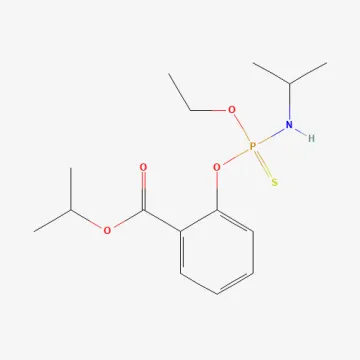
Isofenphos
Description
Mode of action
Isofenphos belongs to the organophosphate class of chemicals and acts as a potent contact and systemic insecticide.
The mode of action involves the irreversible inhibition of the enzyme acetylcholinesterase, which disrupts the nervous system of pests, leading to paralysis and death.
Due to its systemic nature, it is absorbed by plant roots and translocated through the vascular tissues, providing internal protection.
The compound remains stable in the soil for a significant period, ensuring extended residual activity against subterranean insects.
Its effectiveness is characterized by a long-lasting protective barrier that prevents damage to vulnerable plant seedlings and roots.
What it targets
Isofenphos is primarily used for controlling soil-dwelling insect pests that damage the root systems of various crops.
It is highly effective against wireworms, which are larvae of click beetles and pose a major threat to cereals and root crops.
The substance is also widely employed to manage white grubs (larvae of scarab beetles) in soil environments.
Additionally, it targets cutworms and other fly larvae that feed on seeds and the subterranean parts of young plants.
Commonly protected crops include maize, potatoes, sugar beet, and various ornamental species that require intensive soil pest management.
Rates and timing
Application of isofenphos must be calculated based on soil type and the specific level of pest infestation present in the field.
The product is typically incorporated into the top layer of the soil during the pre-planting phase to ensure proper coverage.
Uniform distribution is crucial for the efficacy of the chemical, requiring precise calibration of agricultural application machinery.
Waiting periods between application and harvest are significant and must be strictly followed to ensure food safety standards.
Agro-technical timing is essential; the chemical should be applied when larvae are active in the upper soil layers to maximize exposure.
Restrictions
Isofenphos is categorized as highly toxic to humans, mammals, and aquatic ecosystems, requiring extreme caution during handling.
Personal protective equipment, including respiratory protection, gloves, and chemical-resistant suits, is mandatory for all handlers.
Application is prohibited near water bodies or sensitive areas due to the high risk of environmental contamination and harm to wildlife.
Restricted entry intervals must be strictly enforced for all farm personnel to prevent accidental exposure to toxic residues.
Empty containers and leftover product must be disposed of as hazardous waste according to local and national environmental regulations.
Status in the European Union
Not approved in the EU
- CAS number
- 25311-71-1
- Category (EU)
- IN - Insecticide
- ADI
- 0.001 mg/kg bw/day
EU status is for reference only and does not replace national registration in your country.