
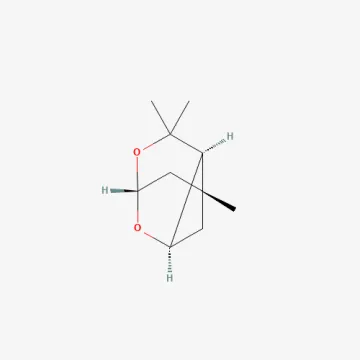
Lineatin
Description
Mode of action
Lineatin is a synthetic analog of an aggregation pheromone produced by males of certain beetle species, particularly from the genus Trypodendron. This chemical compound mimics natural signals used by insects to locate suitable trees for colonization and reproduction.
When used in the field, lineatin effectively disorients pests by attracting them to specially prepared traps. This allows for both reducing the population density in a specific area and monitoring the health of the forest.
The mechanism of action is based on the highly specific perception by insect receptors of volatile molecules of the substance. Even in extremely low concentrations, lineatin induces a distinct behavioral response in adults, forcing them to move toward the source of the scent.
Preparations based on lineatin do not have toxic effects on plants or vertebrates, as they are signaling molecules. Their use is considered a biological control method that prevents ecosystem contamination by pesticides.
Unlike contact insecticides, lineatin does not kill pests directly. Its primary goal is the targeted manipulation of population behavior to control their localization and numbers within a forest area.
What it targets
The main targets for the application of lineatin are ambrosia beetles, with the striped ambrosia beetle (Trypodendron lineatum) being the most dangerous among them.
The pest infests coniferous trees, boring tunnels into the wood, which leads to a decrease in the commercial value of the timber and weakens the health of forest stands.
The use of pheromones is relevant for protecting spruce, fir, pine, and larch during periods of mass insect flight. Lineatin is also used to control pest populations in timber yards.
- Striped ambrosia beetle (Trypodendron lineatum)
- Other ambrosia beetle species (Trypodendron spp.)
The use of this pheromone allows for the timely detection of the beginning of insect migration from wintering sites, which is critical for making decisions on sanitary logging or wood treatment.
Rates and timing
Lineatin is used exclusively in dispensers placed inside or in close proximity to pheromone traps.
Exposure periods depend on the climatic conditions of the region and the start of the pest's flight; traps are usually installed before the appearance of the first adults in spring.
Application rates are determined by the dispenser manufacturer's instructions, as the evaporation rate is strictly regulated to ensure an optimal attraction radius.
It is important to check traps regularly and clear them of trapped insects to ensure enough space for further pest collection.
It is recommended to place traps in open forest areas or along forest edges, maintaining sufficient distance between them to avoid overlapping attraction fields, which can reduce the system's overall efficiency.
Restrictions
Lineatin effectiveness may decrease during extreme weather conditions, such as heavy prolonged rain or abnormally high temperatures, which accelerate evaporation.
Dispenser storage rules must be strictly observed, avoiding direct sunlight and overheating, as this leads to rapid degradation of the active substances.
When handling pheromones, direct skin contact with the dispenser should be avoided to prevent transferring the scent to clothing or tools, which could lead to unwanted insect arrival.
Lineatin is a highly specific compound; traps with this substance will not be effective against other insect species that have a different chemical composition of sex or aggregation pheromones.
The use of pheromone traps requires a systematic approach. Single traps cannot protect a large forest area; organizing a monitoring network or mass trapping as part of forest protection measures is necessary.
Status in the European Union
Not approved in the EU
EU status is for reference only and does not replace national registration in your country.