
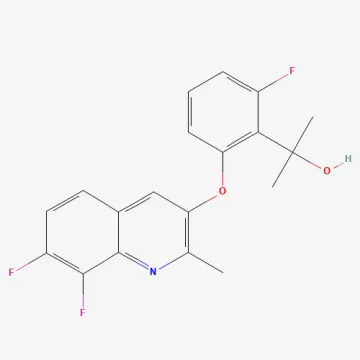
Ipflufenoquin
Description
Mode of action
Ipflufenoquin is a state-of-the-art active ingredient representing a new chemical class of fungicides. It demonstrates exceptional efficacy in controlling various pathogenic fungi.
The mode of action focuses on inhibiting the mitochondrial respiration of fungi, specifically targeting complex III. This leads to an immediate cessation of energy production, essential for the survival and spread of the pathogen.
The substance possesses strong curative and preventive properties, making it a versatile tool for managing fungal outbreaks in various agricultural settings.
Ipflufenoquin shows systemic movement within the plant, which helps protect new growth and ensures that the fungicide is redistributed effectively across the foliage.
Its robust resistance to rain-fastness ensures that the protective barrier remains intact even under varying meteorological conditions, extending the interval of efficacy.
What it targets
The primary target of Ipflufenoquin is the control of powdery mildew species, which are widespread diseases affecting diverse vegetable and fruit crops.
By preventing the establishment and development of fungal mycelia, the substance protects the photosynthetic capacity of the plants, directly impacting yield potential.
It is particularly effective against strains of pathogens that have developed resistance to existing classes of fungicides, such as strobilurins and triazoles.
The application helps maintain high crop quality, preventing the visual and physical degradation caused by fungal growth on fruits and leaves.
It is widely used in intensive farming systems where rigorous disease management is required to maintain the economic viability of the harvest.
Rates and timing
The application rate for Ipflufenoquin should be determined based on the specific crop type and the severity of the pathogen pressure present in the field.
For the best biological results, spraying should be initiated at the very first signs of disease or during critical growth stages that are highly susceptible to infection.
Effective coverage of the entire plant canopy is essential, requiring precise calibration of spraying equipment to ensure an even distribution of the active ingredient.
A minimum interval of 10 to 14 days between consecutive applications is typically recommended to sustain consistent protection through the high-risk periods.
Strict adherence to pre-harvest intervals is mandatory to comply with food safety standards and ensure that no chemical residues exceed the established limits.
Restrictions
Operators must wear appropriate personal protective equipment (PPE) when handling and applying products containing Ipflufenoquin to prevent skin and respiratory exposure.
Mixing the product with highly alkaline solutions should be avoided, as such conditions may lead to the degradation of the active ingredient, reducing its effectiveness.
To implement a successful anti-resistance strategy, growers should rotate Ipflufenoquin with fungicides that possess different modes of action to manage the genetic diversity of fungal populations.
Special care must be taken to prevent spray drift into sensitive areas and to ensure that runoff does not contaminate water sources, protecting local aquatic biodiversity.
Proper storage in cool, dry, and well-ventilated areas, away from food and feed, is crucial for maintaining the stability and safety of the chemical product.
Status in the European Union
Pending
- CAS number
- 1314008-27-9
- Category (EU)
- FU - Fungicide
EU status is for reference only and does not replace national registration in your country.